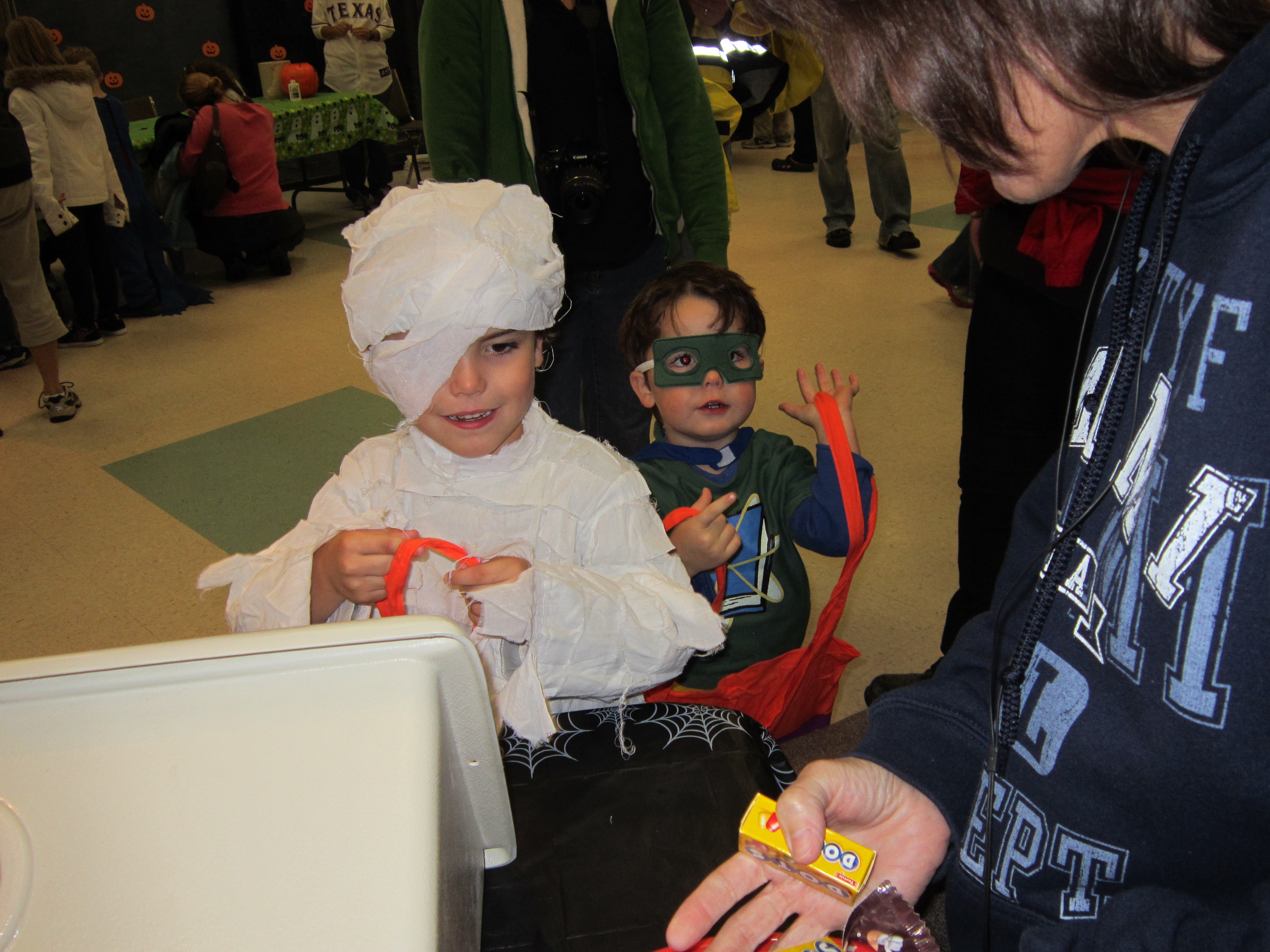
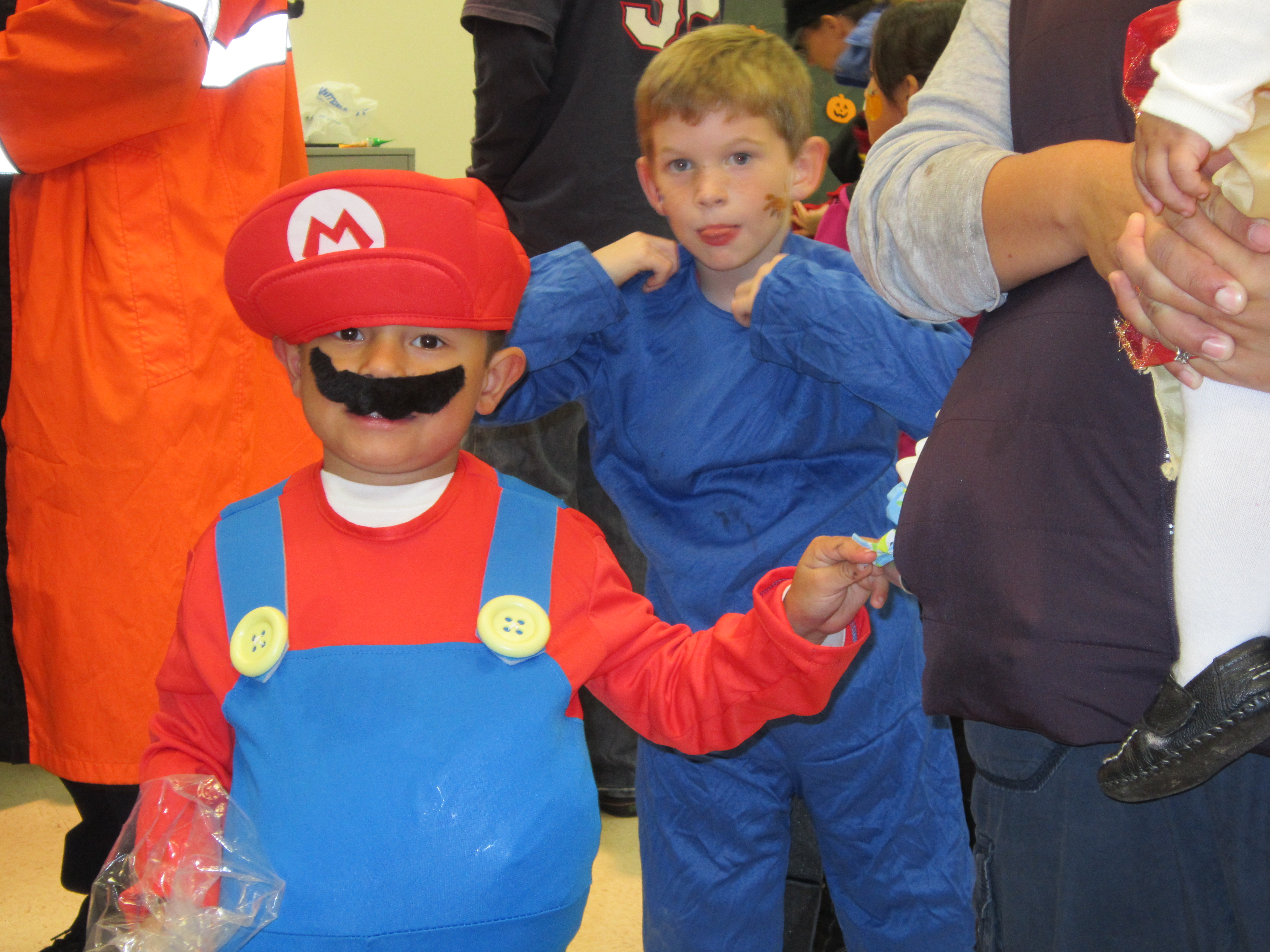
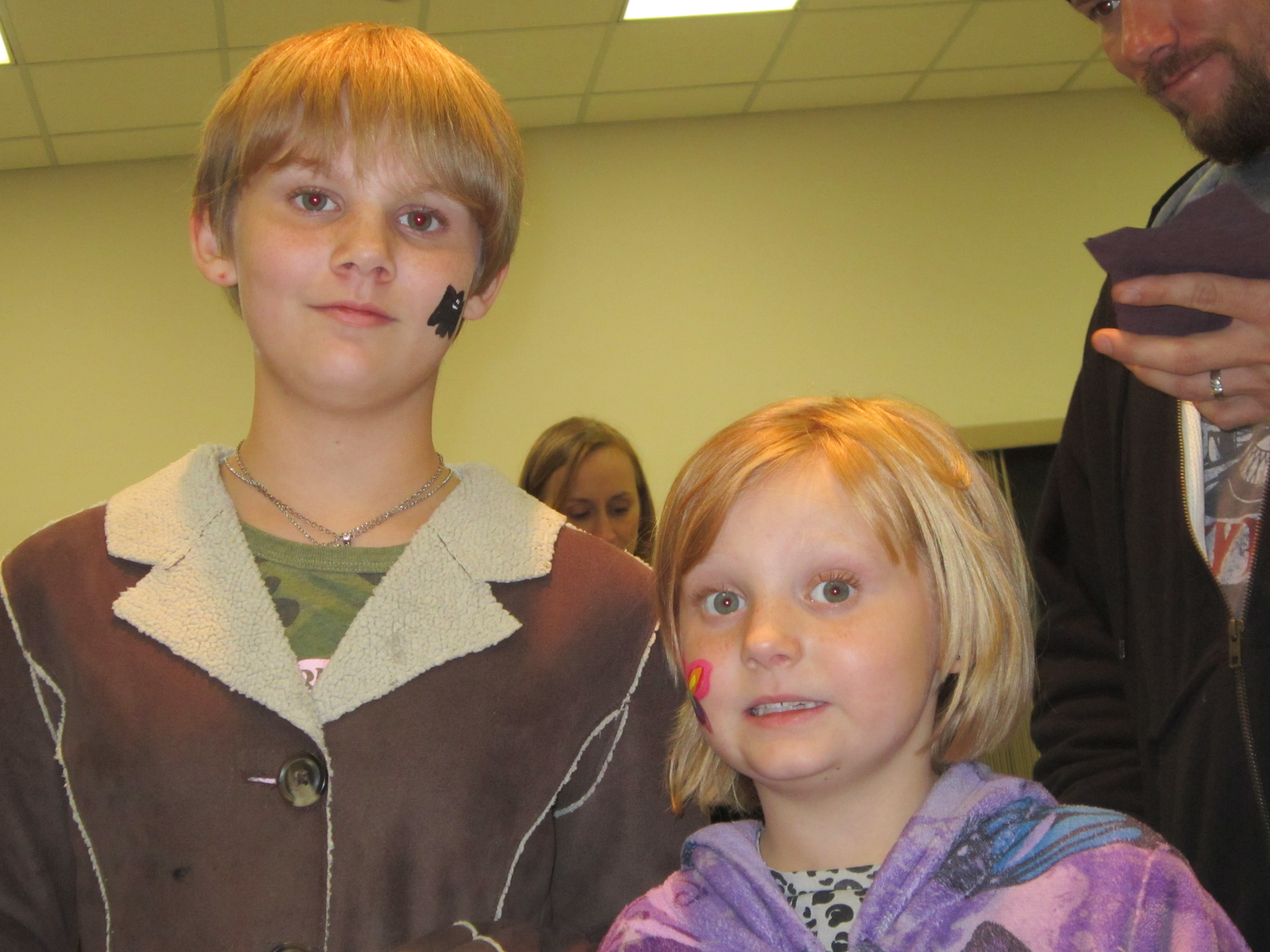
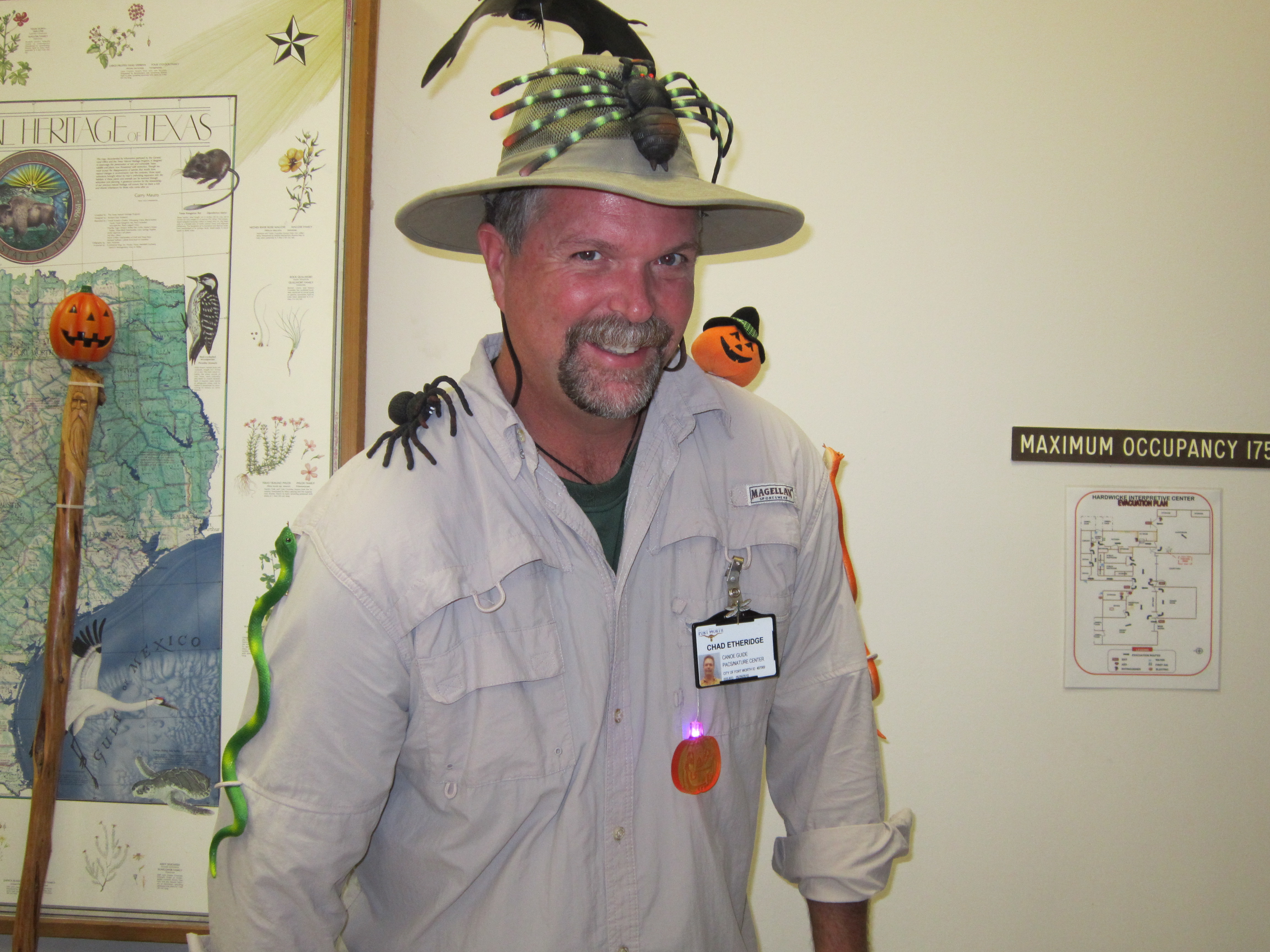
The Fort Worth Nature Center & Refuge held its first annual Trails & Treats event last Thursday, October 27. Here are some of the pictures I took.
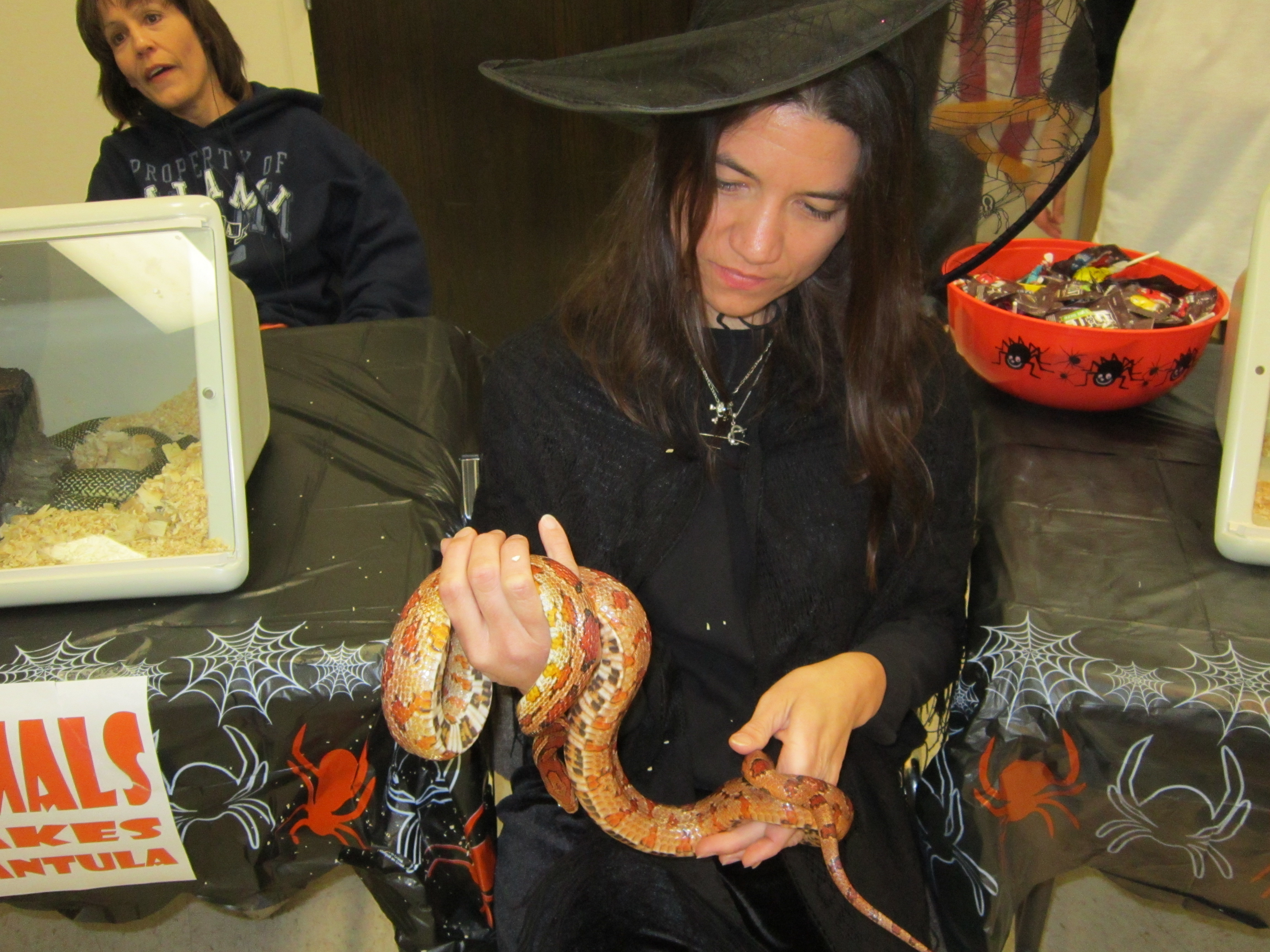
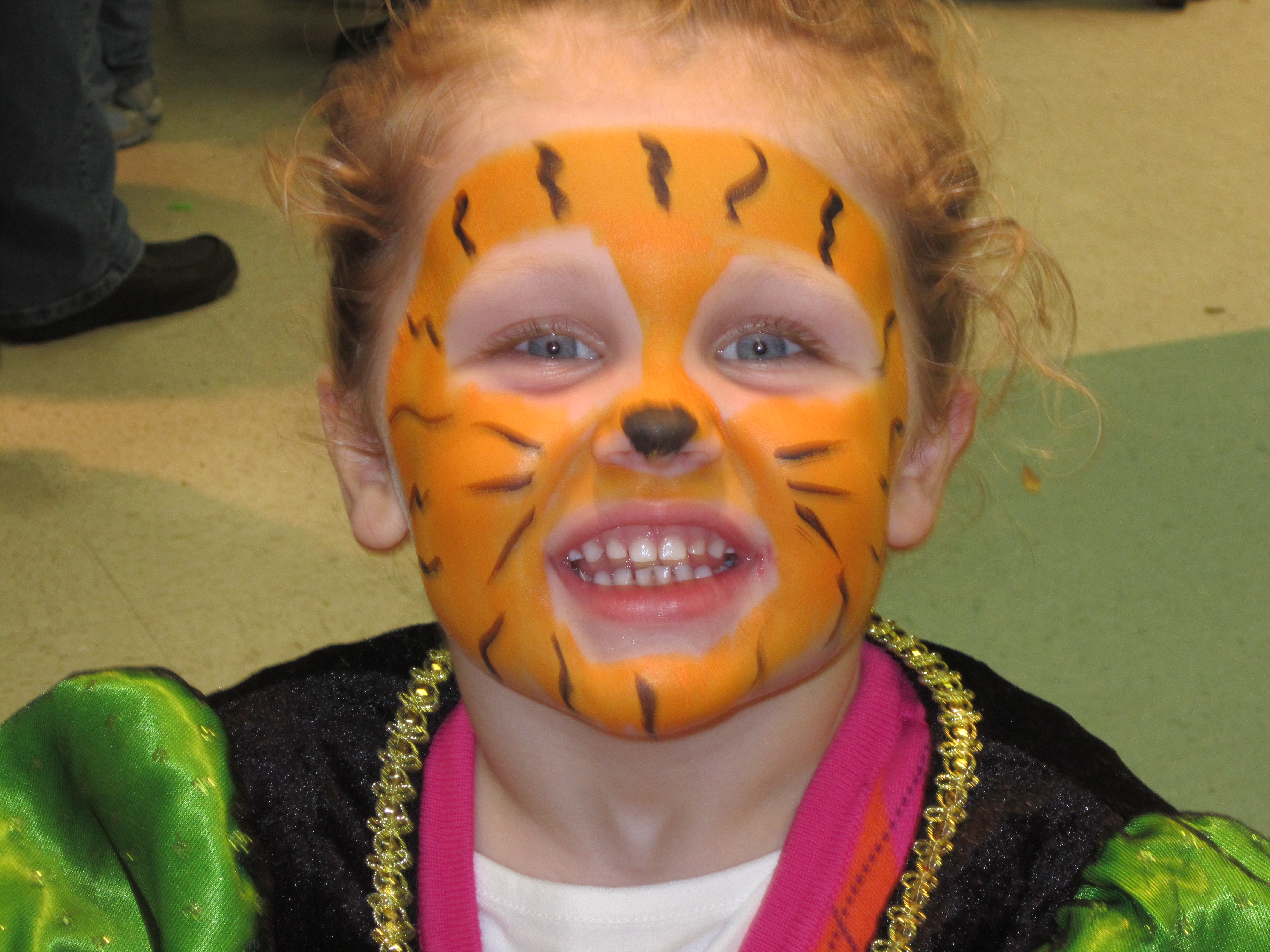
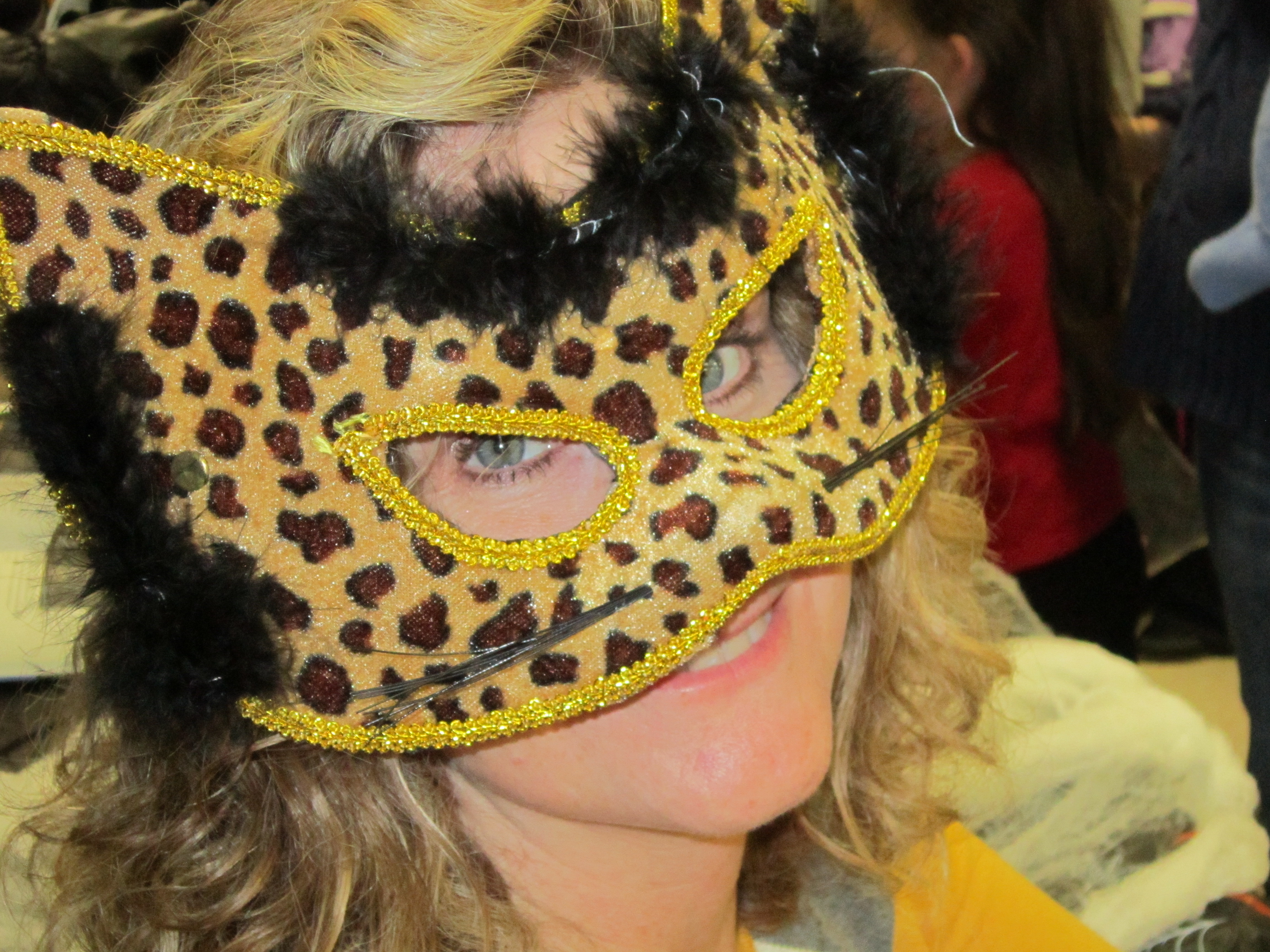
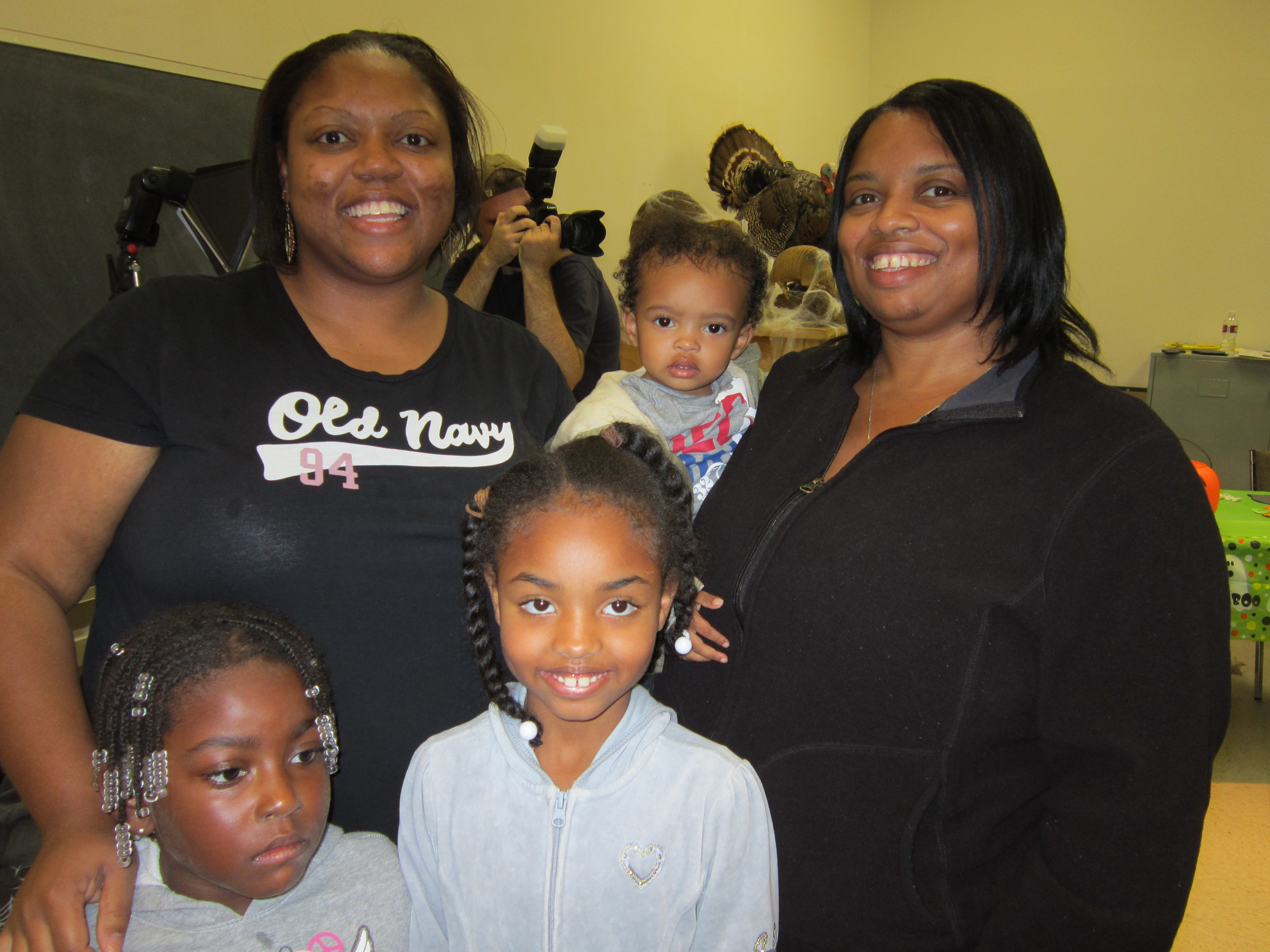
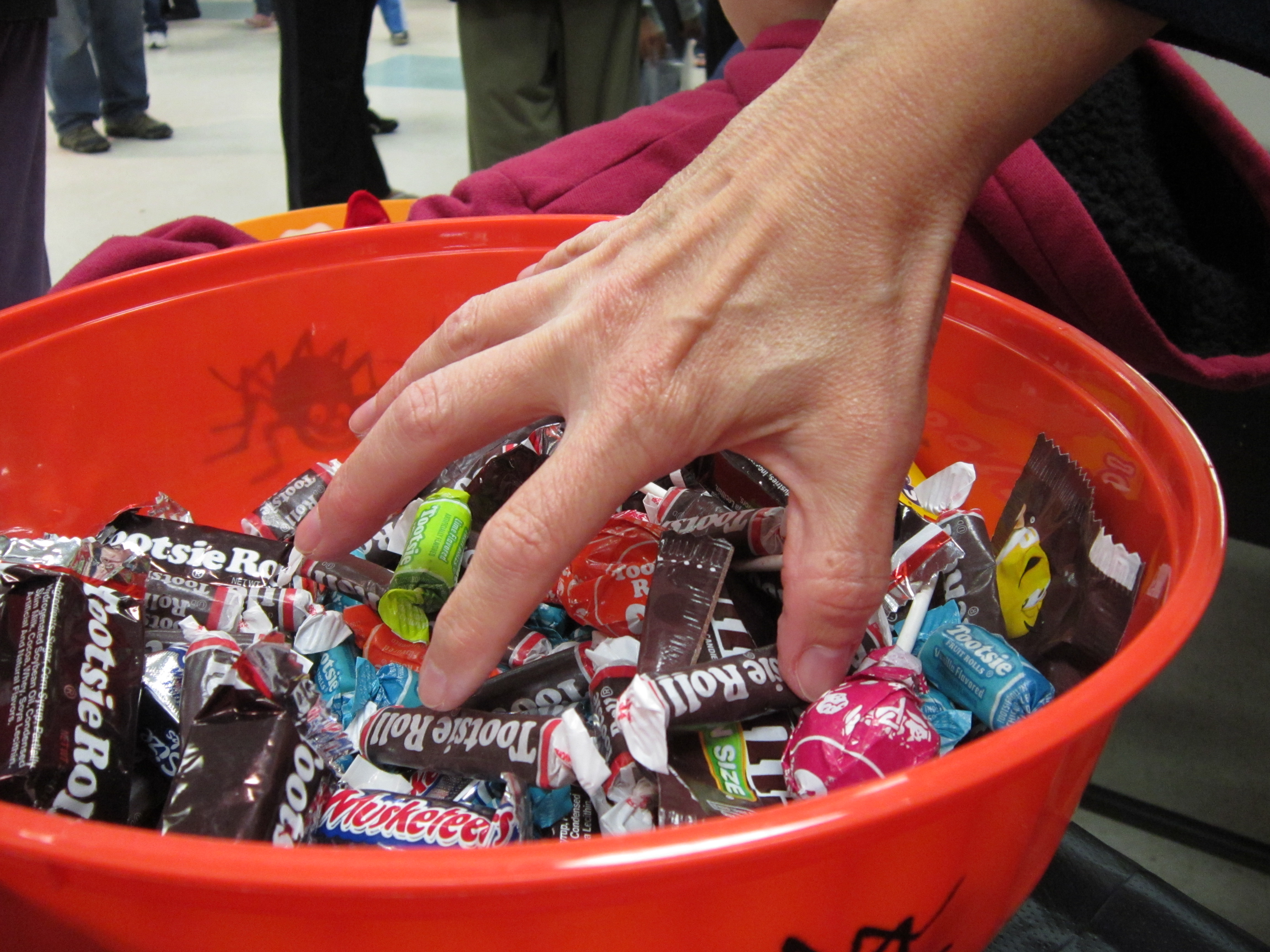
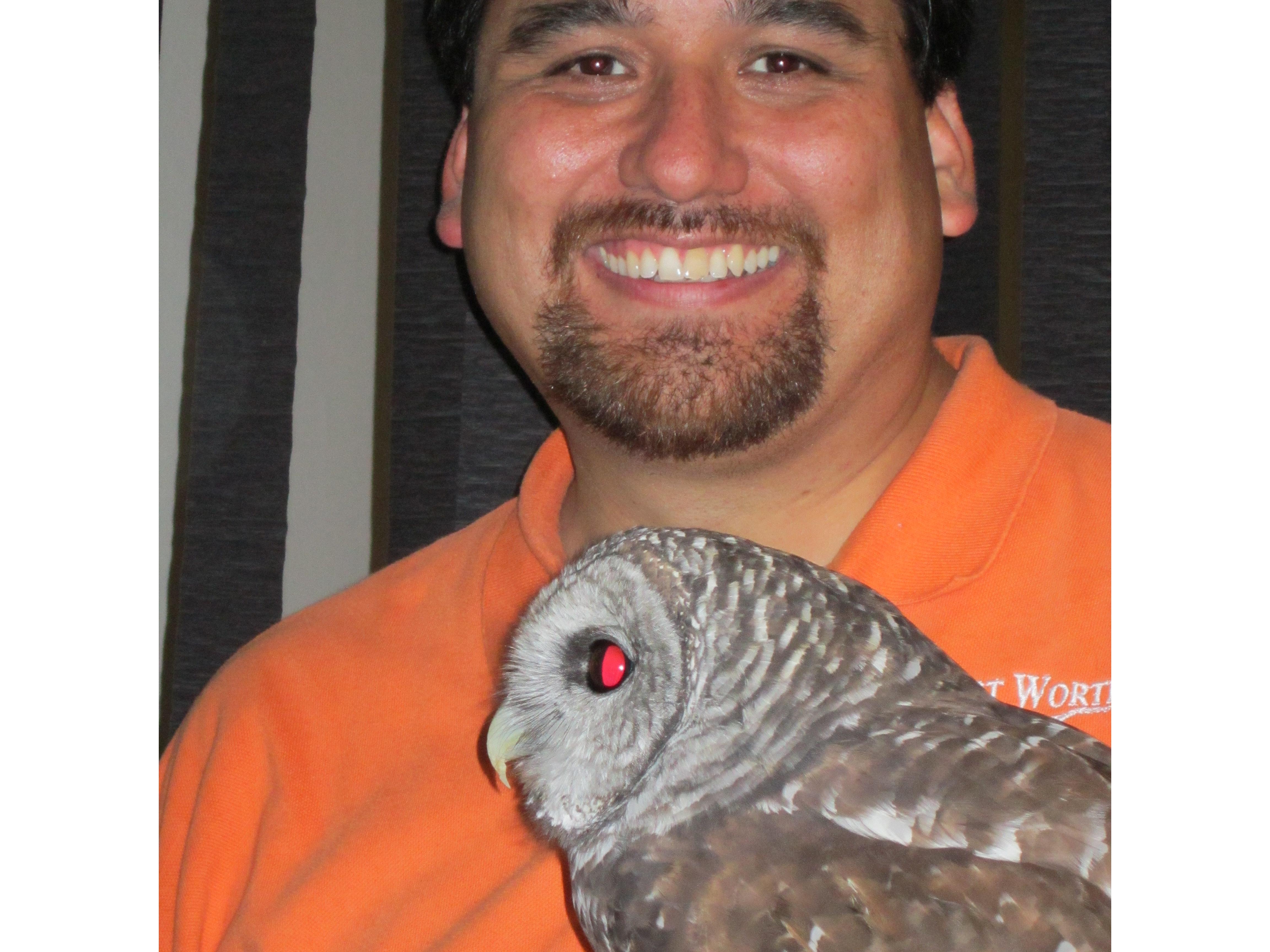
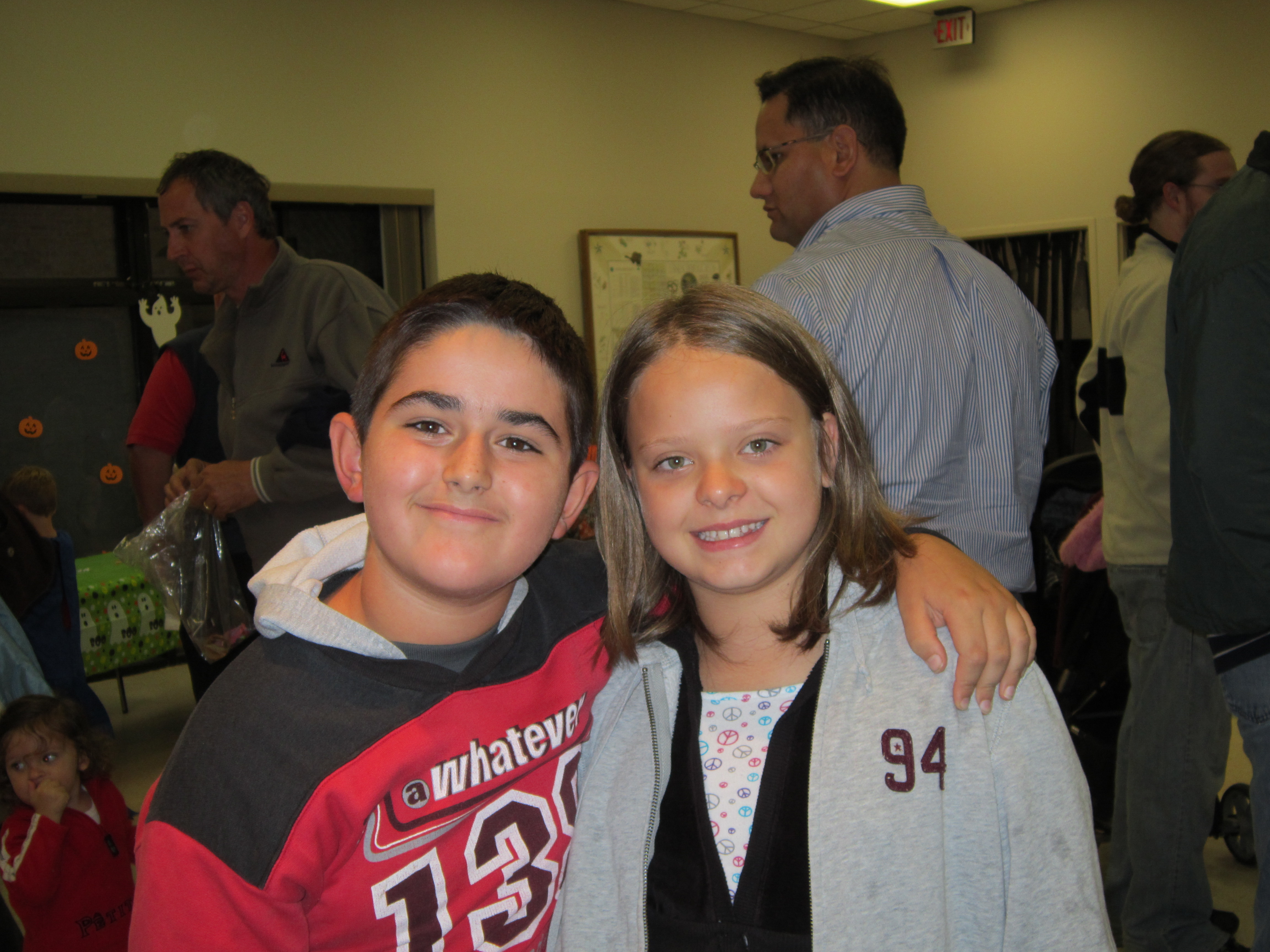
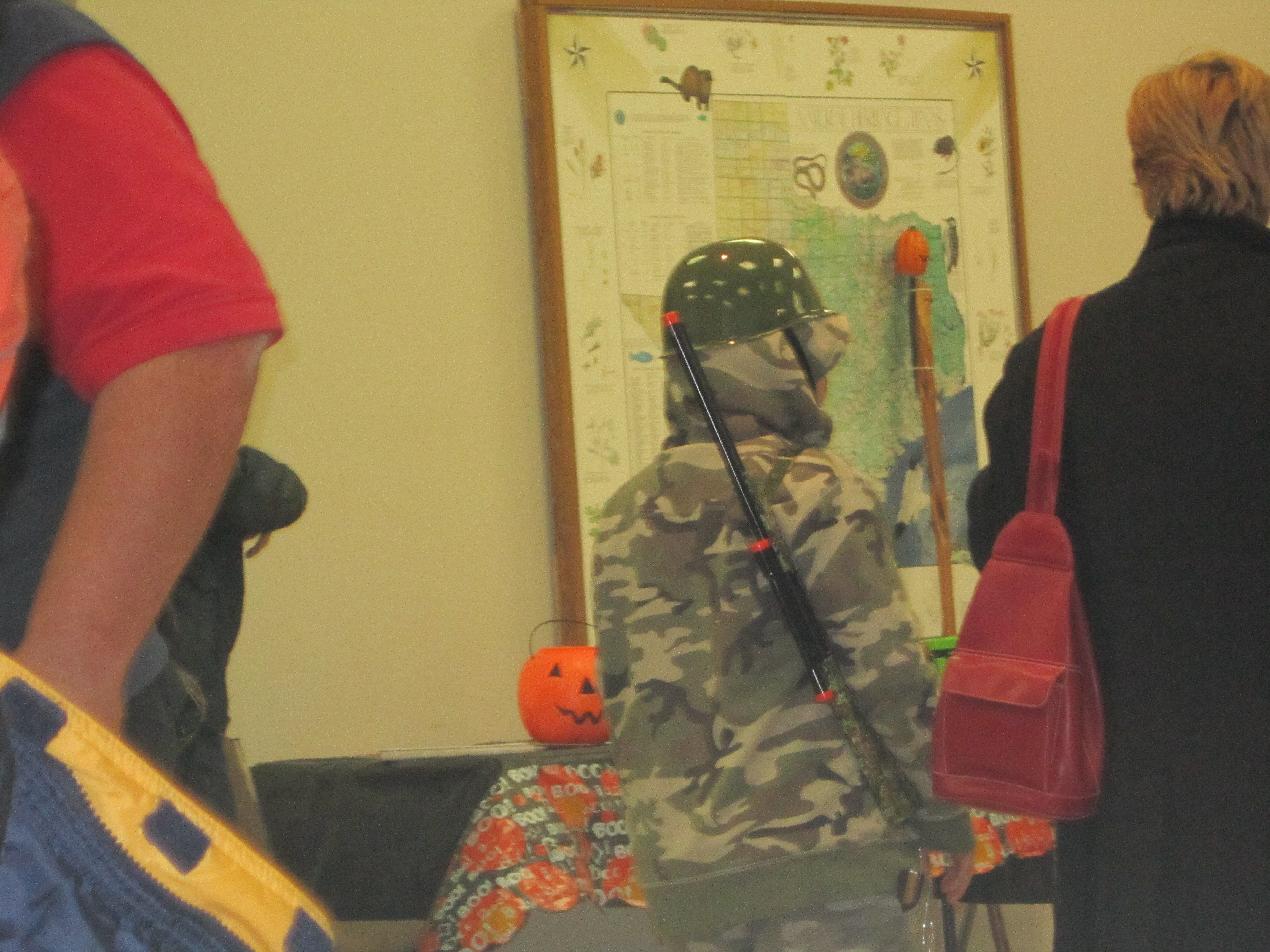
Even the military came to Trails & Treats!
 <
<
Helping Nature One Bite At A Time
October 30, 2011
The Fort Worth Nature Center & Refuge held its first annual Trails & Treats event last Thursday, October 27. Here are some of the pictures I took.
Even the military came to Trails & Treats!
<
August 22, 2011
I interviewed a friend of mine a couple days ago. His name is Bob Smith and he has been working with animal breeding and conservation for many years. I wanted to share some of the things he had to say about wildlife, especially his favorite – birds.
J: Where are some of the places you have worked or volunteered?
B: I’ve worked at a lot of different zoos and wildlife parks including the Fort Worth Zoo, the Oklahoma City Zoo, the zoo in Lufkin, Texas and Fossil Rim Wildlife Center in Texas. I also worked at the zoo in Nassau, Bahamas. I have also been an active member of the Fort Worth Audubon Society as we as a volunteer for the River Legacy Park Science Center in Arlington, TX.
J: How long have you been involved with your favorite of all wildlife – birds?
B: Over 45 years, now. I started working with birds when I was about 15 years old. My nick name in school was “The Bird Man.” Over the years I have owned and trained a lot of birds including falcons.
J: Why do you like birds so much?
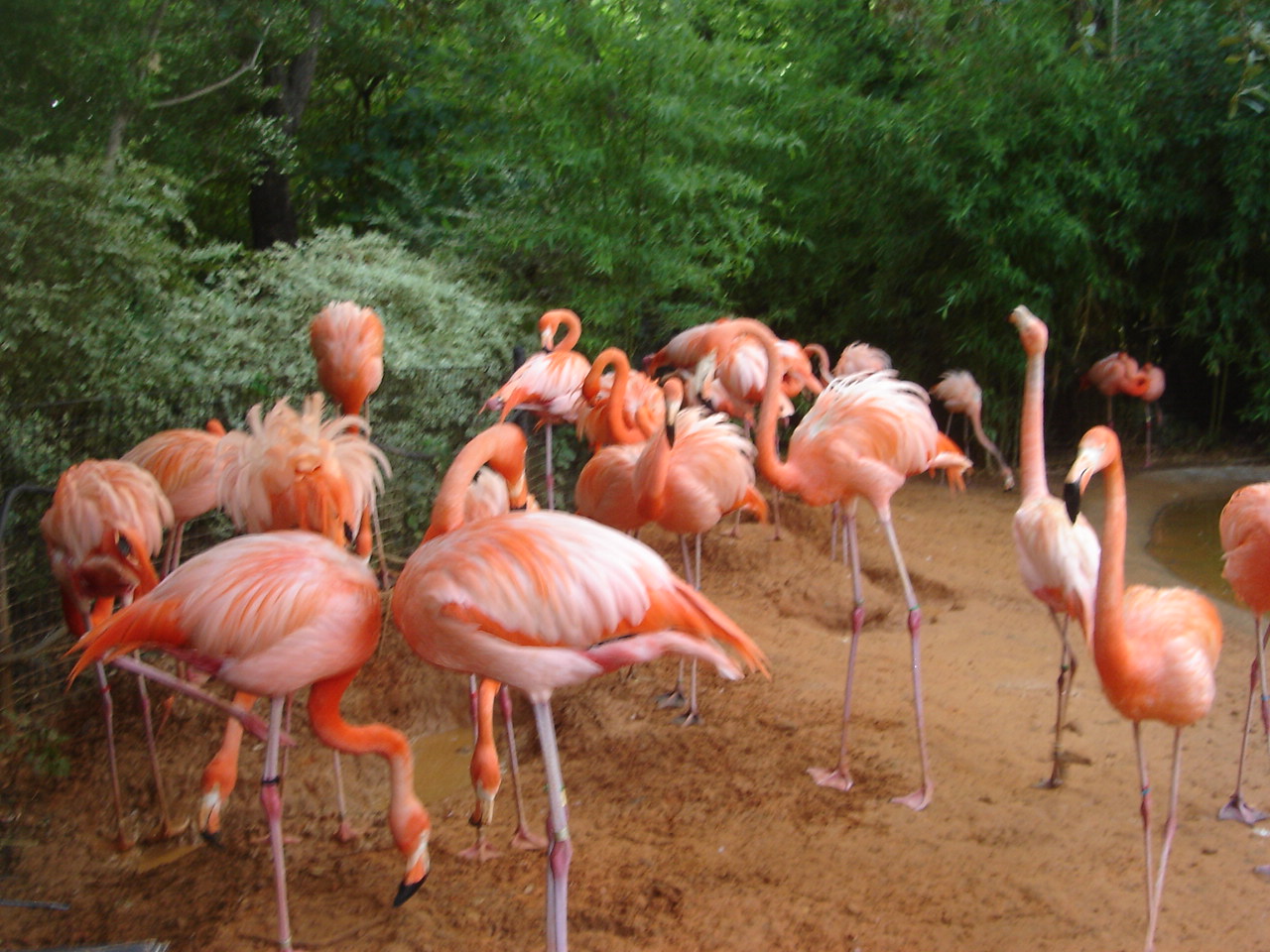
B: Birds are challenging to take care of and breed. When a mammal is born, for instance, it needs milk – pure and simple. Birds, on the other hand have all types of diets. Depending on the species of bird the diet may differ. Plus, many have different breeding issues. For example, once we were trying to breed flamingos. Unless there is a huge flock, flamingos won’t breed very well. So some zoos used a trick to get them to breed more — they set up mirrors all around them. It worked!
J: What are some of the different types of birds you have worked with?
B: I’ve worked with waterfowl, raptors, parrots, cranes, flamingos. Specific species I have worked with include peregrine falcons, harpy eagles and Africa crowned cranes.
J: Tell me about the falcon you currently have?
B: His name is Quapa. He is about four months old. He is a mix of white gyr falcon and peregrine falcon. Did you know that male falcons are smaller but faster than female falcons? They are considered raptors because they prey on other birds and mammals.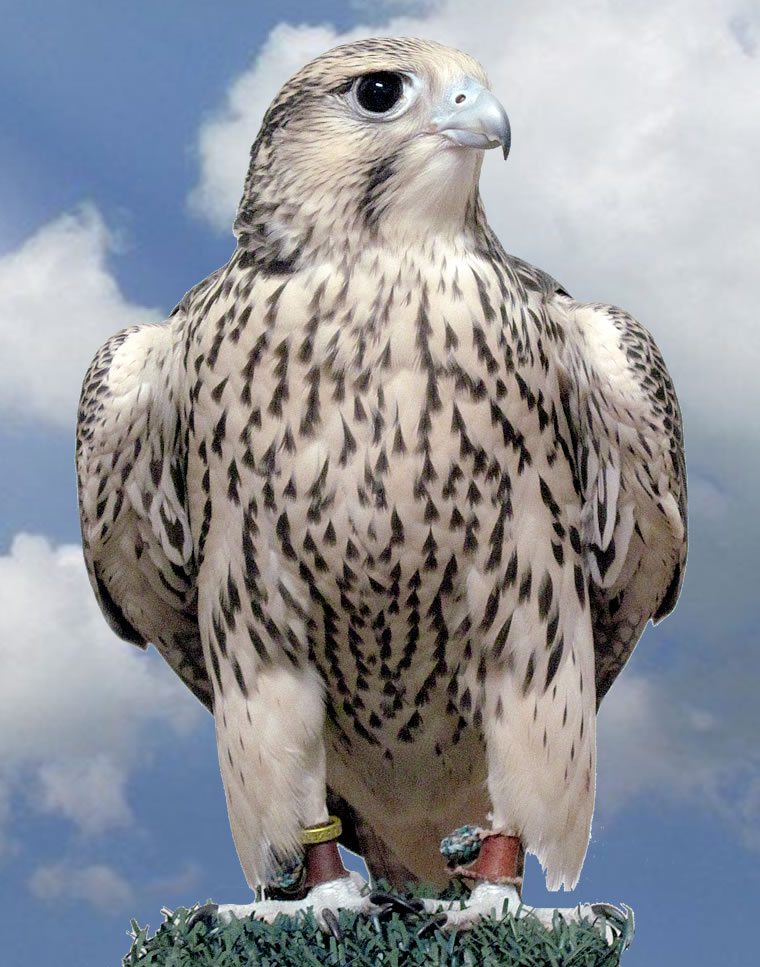
J: I know that the country is pretty hot right now. Since I live in Texas I know all about the drought in this area. How will that affect the different birds in Texas?
B: I’m worried about the birds especially around the Texas coast. Several years ago there were drought conditions. When the whooping cranes migrated we saw that a lot of the younger birds did not survive the winter because there was a lot of salinity in bays due to the drought. This had a sort of domino-effect on the food chain for the cranes. More salinity in the water meant that blue crabs (a major food source for the whooping crane) did not multiply as much so there were less crabs for the cranes to eat. Plus, the acorns from acorn trees (another food source for the whooping crane) dried up and the trees died. In addition, the marshes (where the whooping cranes like to hang out in the winter) dried up, so there were less fresh water sources for the cranes to drink from.
J: Is there anything we can do to help birds during this drought?
B: Well, one thing you can do is make sure you have wild bird feed left out in feeders for the birds. Also, make sure that you put out your hummingbird feeders. The drought means less flowers blooming which mean the hummingbirds have less food sources. So they need our help.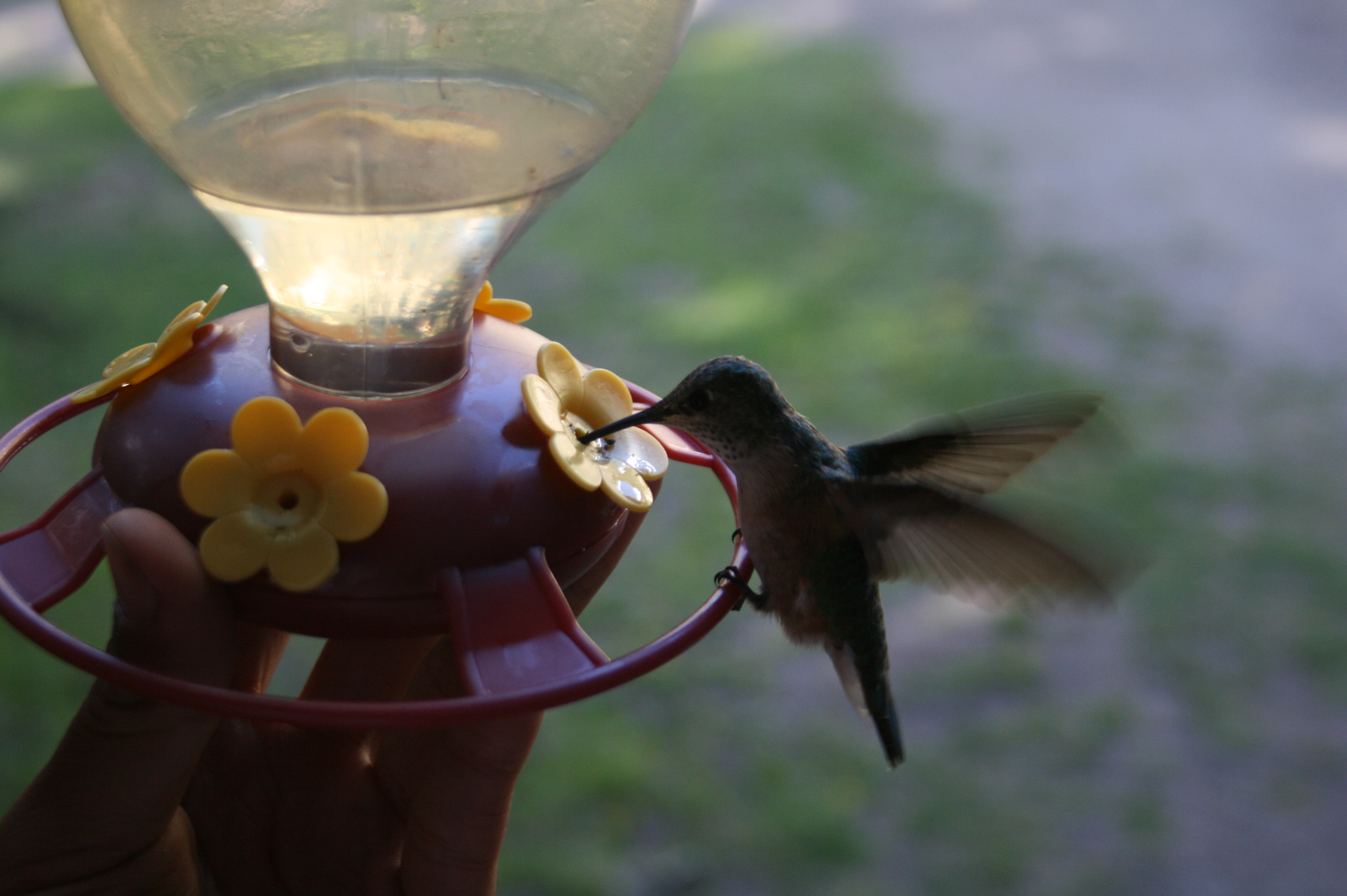
I thought that these tips from Bob were pretty good. We also make sure that we have clean water in the bird bath on a regular basis. I’ve noticed that some of the raccoons, squirrels and possums in our area are drinking it, too. Thanks Bob!
July 28, 2011
Once when I was little I had a bunch of plastic snakes that I left in the middle of the floor. Later that night my mom went to pick them up and put them in my toy box. Well, one of them moved. It was a REAL snake that found it’s way into our house and laid down to take a nap with all his snake “kin. My mom said that she moved real fast to the other side of the house, yelling instructions to my dad to “get rid of it, but don’t kill it.”
My dad is not really afraid of snakes. My mom is afraid of them but she can handle seeing or touching real tame snakes — as long as someone else is there to hold them.
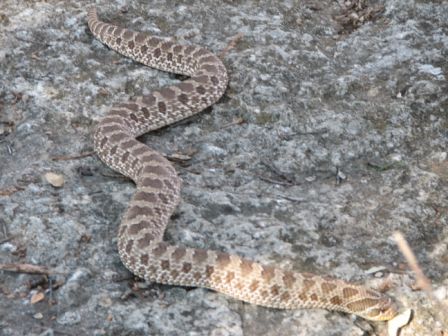
The hog-nosed snake pictured here is from the Nature Center. They use live animals when they are teaching people about conservation and other stuff. This snake was one of the “helpers.” Unfortunately she passed away of natural causes a few months ago. She will be missed. Remember, hog-nosed snakes should not be pets. They should live free in the wild. The Nature Center only uses wild animals for educational things.
July 22, 2011
I recently saw the new movie “Zookeeper” with Kevin James as Griffin the chubby zookeeper. The main story is that he really likes this girl but he keeps striking out. So the animals at the zoo (who can talk to Griffin) give him advice so he can be a big shot. I also see why the movie is rated PG with animals saying the H word. It’s pretty much the only cuss word they say. The movie has a star studded cast with Sylvester Stallone providing his voice as the great lion named “Joe” and Ken Jeong, the guy in the “Community” series and in the new Transformers movie, who plays the guy who takes care of the reptiles. His name is Venom. Cher’s voice whoever that is (I guess she’s famous) is the lady lioness.
Warning: I’m about to reveal my favorite part of the movie. If you don’t want to know about it and keep the movie a surprise don’t read the words in bold writing:
My favorite part was the party at T.G.I Fridays. Where Griffin and the gorilla Bernie just have a great time hanging around.
Hope I didn’t spoil the movie.
So if I rated the movie to 1 to 10 I would give it a 6 or 7.
I think it does a good job sending out a message to be kind to animals. The one mean zoo keeper ends up getting just desserts in the end – but I’ll let you see the movie.
I hope you check it out.
July 7, 2011
Who is Michael Perez? He is a park naturalist for the Fort Worth Nature Center & Refuge. I recently visited Michael at his office in the Hardwicke Interpretive Center at the FWNC&R to interview him. He had to move a very large telescope (the case alone is almost as large as me) so I could sit down. These are some of the things I asked him:
J: What do you do at the FWNC&R?
M: I teach summer camps for third and fourth graders. I also do outreach programs where I take animals to schools and groups to teach about those animals. I provide articles for the FWNC&R newsletter and schedule of events. I also worked on a long-distance educational program over the Internet that included students from all over, including different parts of Texas, Oklahoma, Kansas and even Alberta, Canada! So really I do some work with kids and some administrative work, too.
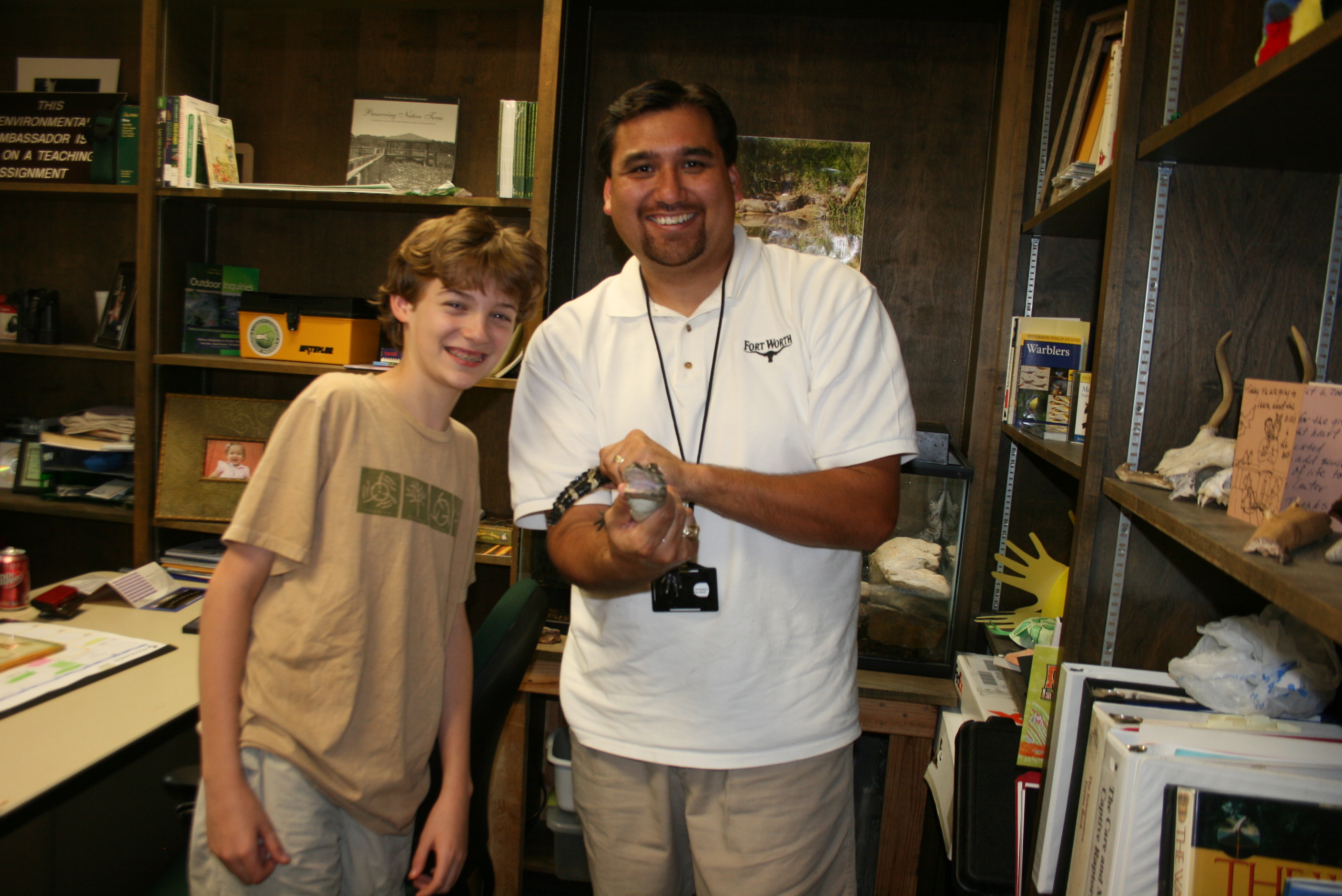 Joe and FWNC&R naturalist Michael Perez with a “snappy” friend. The FWNC&R stresses that alligators do NOT make good pets. This guy is only used for educational and research purposes. The friend is actually a baby alligator. And I know “snappy” is a bad pun. I dont know any that are good.
J: How long have you worked for the FWNC&R?
M: I have worked here for five years. I wanted to worked in Texas and be near my family so working at the FWNC&R was really a nice opportunity for me. I have worked in outdoor education for many years including places like Utah and Georgia. I’ve worked a lot with raptor birds (eagles, hawks and falcons). In Savannah I worked with marine life, too.
J: What’s new at the FWNC&R this summer?
Michael told me that new exhibits are being made for many of the snakes. I saw a lot of terrariums being built and painted while I was there. Michael also said they are working a lot on updating the Hardwicke Interpretive Center. All of this is or will be open to the public too, so be sure to check out the new stuff when you visit.
The last thing I asked Michael was about funding for animal care. He said animal feeding and care is always the most important and expensive thing. The FWNC&R has a private group called “Friends of the FWNC&R” that tries to raise money for the Nature Center. That’s how I try to help, too even if it is only a little bit at a time. If you want to help the FWNC&R you should contact them through the link on this page, or at http://www.fwnaturecenter.org.
June 24, 2011
Well, if you chose the third answer on the poll you were the most correct. Zebra skin tones depend on how much sun they get exposed to which affects their pigment. Some zebras are mostly white (or pink) but the sun creates a black stripe. Some are mostly black and white will come out if they are in the shade a lot. Some zebras are a little of both because they are in and out of the sun — so their skin is sort of already stripey.
Thanks for taking my first poll. I will post more in the future.
June 9, 2011
My mom and I went to Fossil Rim this week. It wasn’t too crowded except there was a bus full of kids in front of us that took forever to move. Luckily we passed it at the half-way point.
I think the most interesting thing to see at Fossil Rim this time was when the zebras tried to eat my mom’s car.
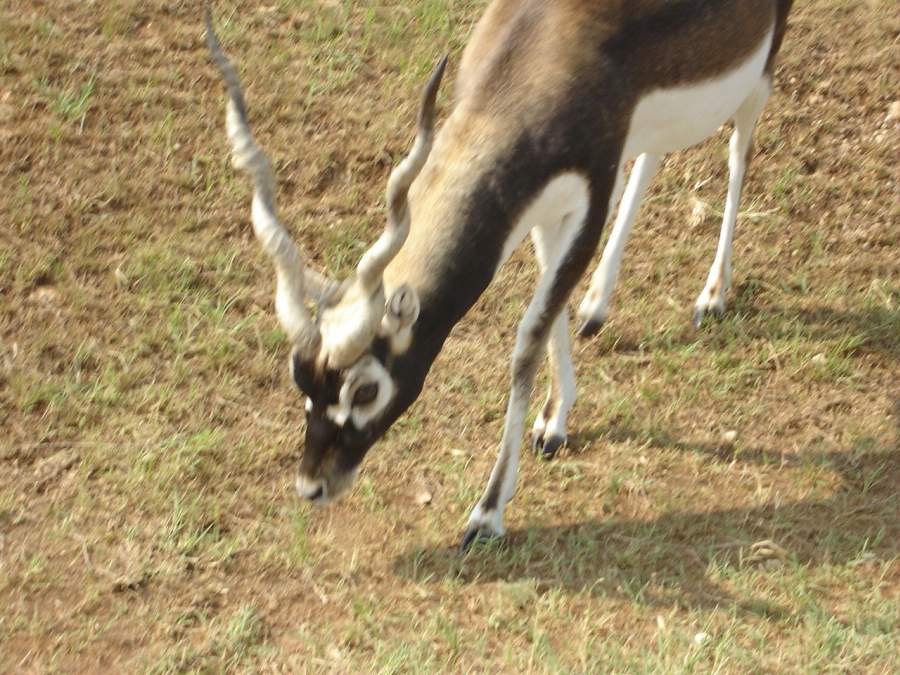
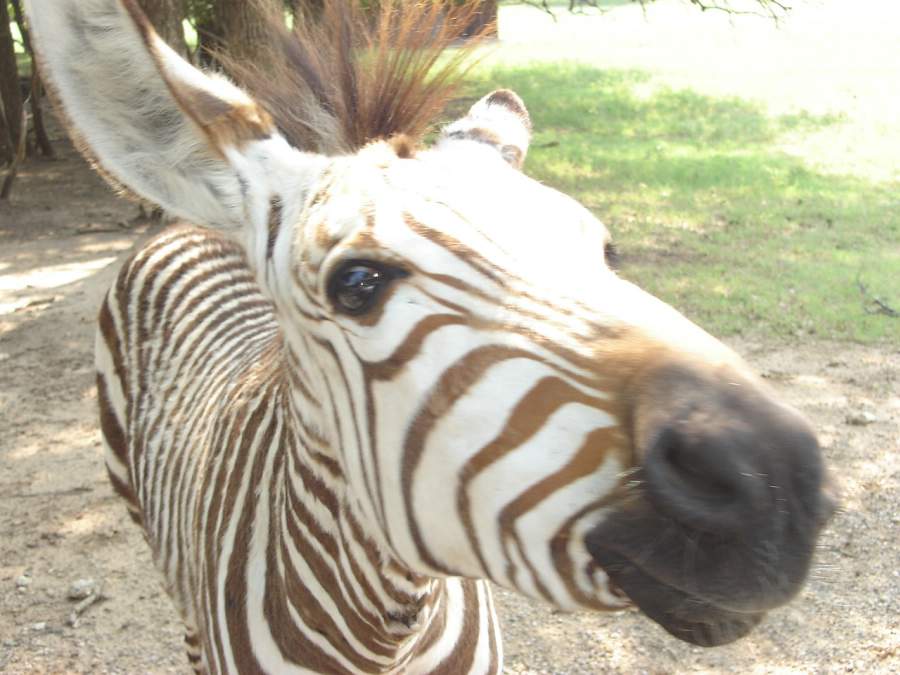
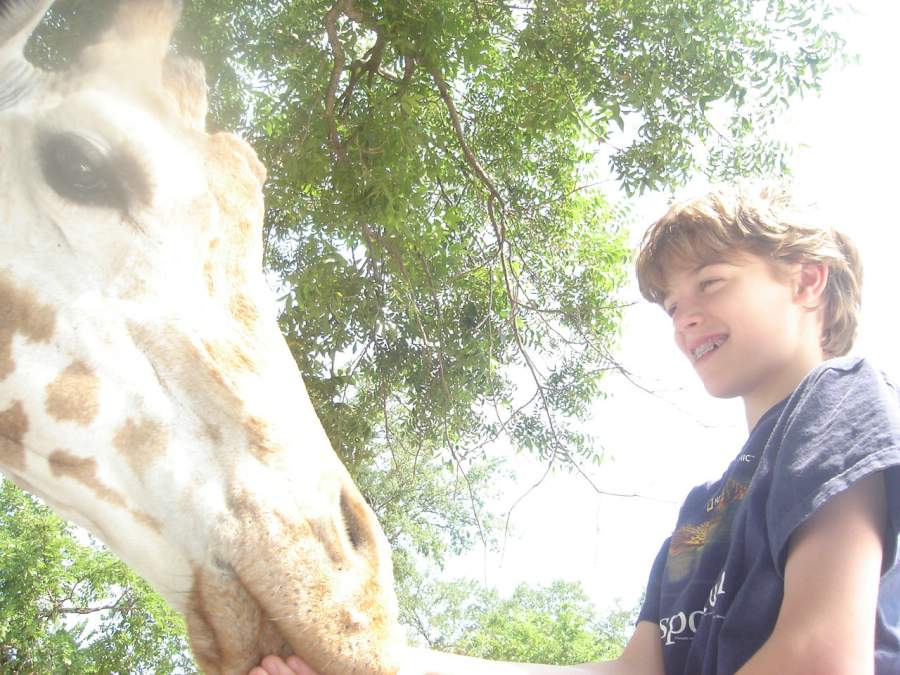
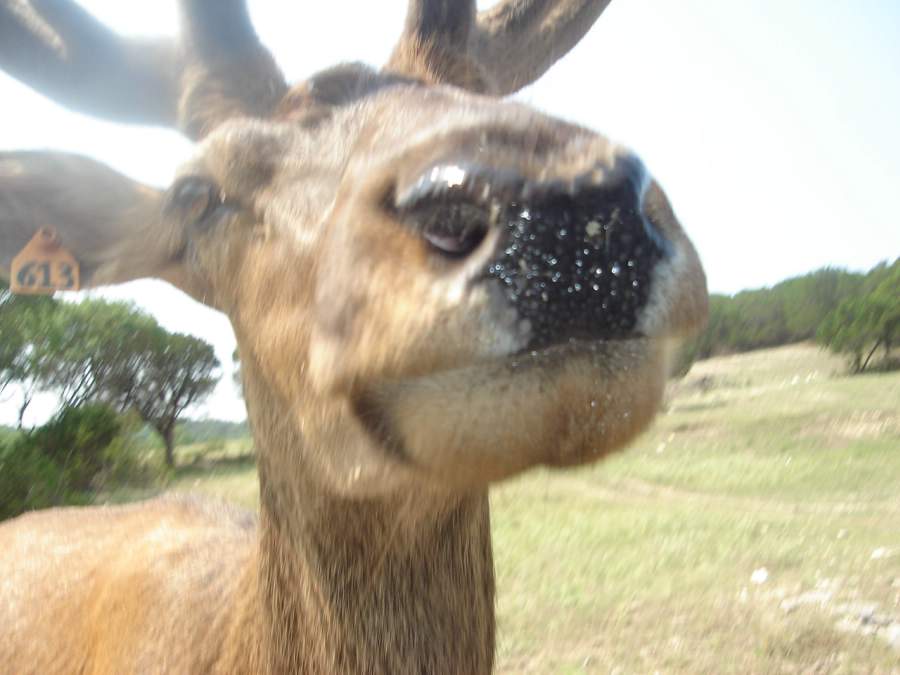
Photos by Joe and Kari Kirkham
June 8, 2011
My cousins were up one night when they heard a noise outside. They saw a opossum limping across their yard. Well, their neighbor’s dog attacked the opossum. So they came to the rescue and noticed that there was a hole in the opossum’s leg. They went by to their other neighbors house who works at the Fort Worth Zoo for help, and the opossum was brought to a nursing facility where they take animals who were hurt in the city and fix em up. Once they are all good, the animals are released into the wild. The opossum was fixed up and is in the forest!
May 16, 2011
I went to Bridgeport this weekend to the Center for Animal Research and Education (CARE). I haven’t been for awhile so it was fun to see all the cats again. I heard some new stories like what happened to Princess, one of the white tigers. See, CARE takes a lot of donated food from people but they are real careful about what they take because some stuff can hurt the cats. Some people gave CARE a horse that they said had died of natural causes but the horse was really euthanized. This made the cats that ate it real sick. Princess especially got sick and almost died. The people at CARE had to do a lot to save her. The good news is that Princess is now OK and she talks a lot to people who come through the facility (she likes a lot of attention). The sad news is that when CARE has to spend money on stuff like treating Princess then there is not as much money left for other stuff, like buying food or fixing up their pens.
If you want to help CARE then click on my link on this site and the CARE site will tell you how to donate. Be sure to tell them that “Joe sent you…”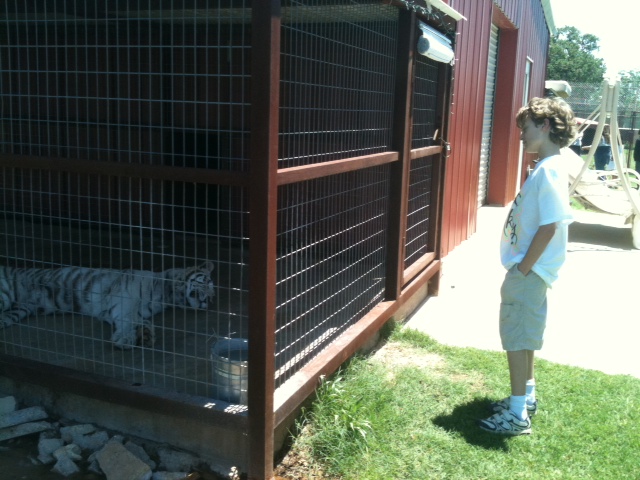
 Joe Bites