Home

Attack of the Butterflies!

Leave a comment

There were a lot of butterflies in Texas this spring. My aunt Shellie Metroka got some great photos of them in her yard. I asked her a few questions about these butterflies.

J: Why do you think we had so many butterflies in Texas this year?
S: I think it was because we had a mild winter and the drought ended. It was a good combination of weather-related circumstances.

J: What types of species did you’d see the most often? We’re there more than one?
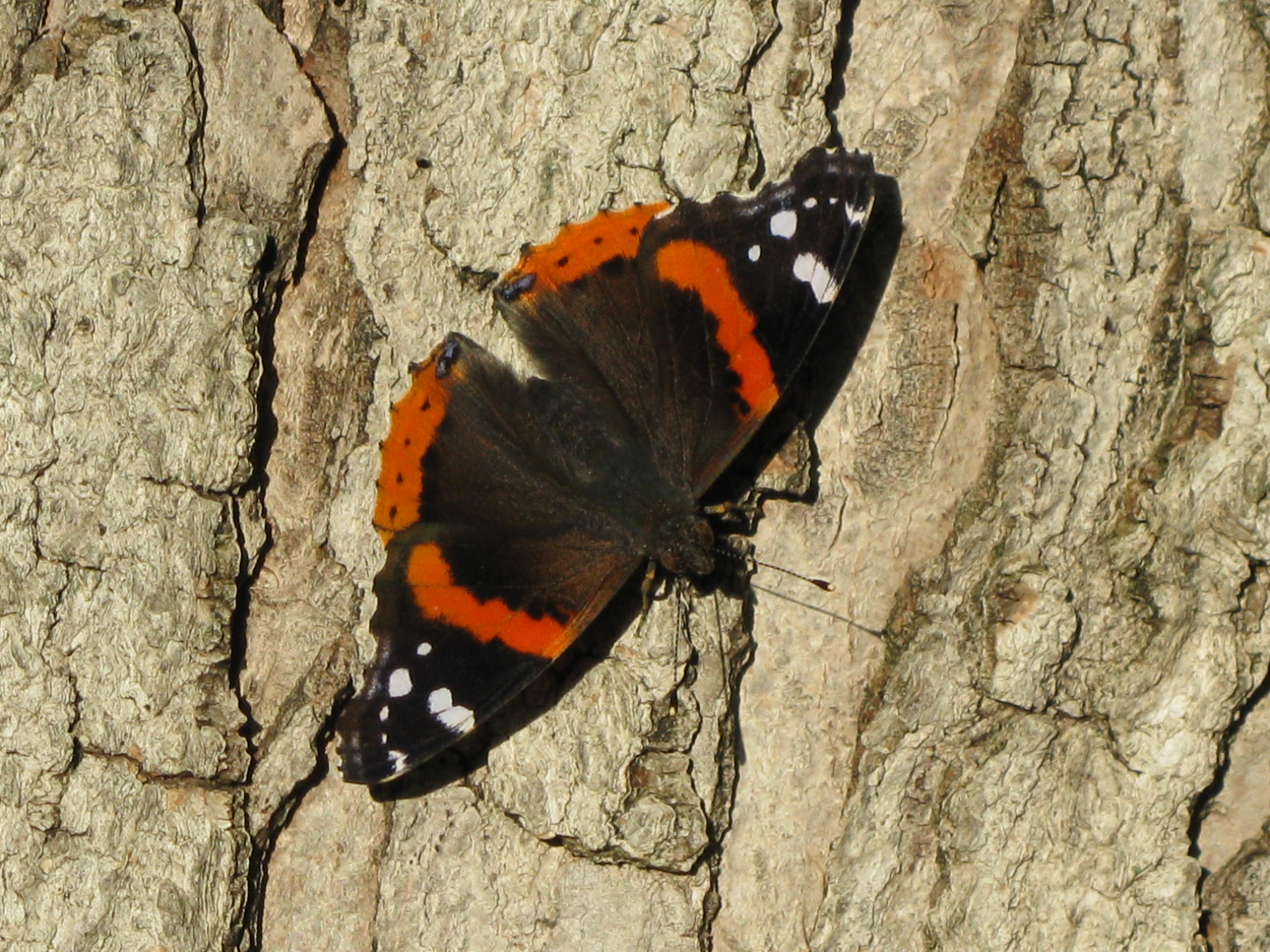
S: There were more Red Admirals than other kinds but I was able to identify Hackberry Emperors and Question Marks. And there were three or four different kinds that I didn’t get photos of so I wasn’t able to identify them.

J: what species did you see the least?  Or we’re they all the same species?
S: There was a Black Swallowtail that was just beautiful but I only saw a couple of those. I tried to get photos but it wouldn’t hold still long enough.

J: You got some great photographs of the butterflies. How hard was it to take those pictures?
S: I was surprised. It was easier than I thought. The camera I used has a great zoom feature that really helped. I will admit that for every great shot, I had to delete four or five blurry ones.

J: Did you notice more of anything else, like bees this year? How often did you see those?
S: It’s funny, usually there are lots of bees and not so many butterflies. This year it was the other way around, lots of butterflies but not so many bees.

J: do you have a favorite butterfly?
S: Of course you can’t live in Texas and not be partial to Monarchs, since we are on their migration path. I also really loved seeing the Question Mark. It’s an intriguing name and a really lovely butterfly.

We don’t see as many butterflies now as we did at the first of May but we still see them. My mom is trying hard to plant butterfly-friendly plants in her yard to keep them attracted to our house.

Thanks Aunt Shellie!
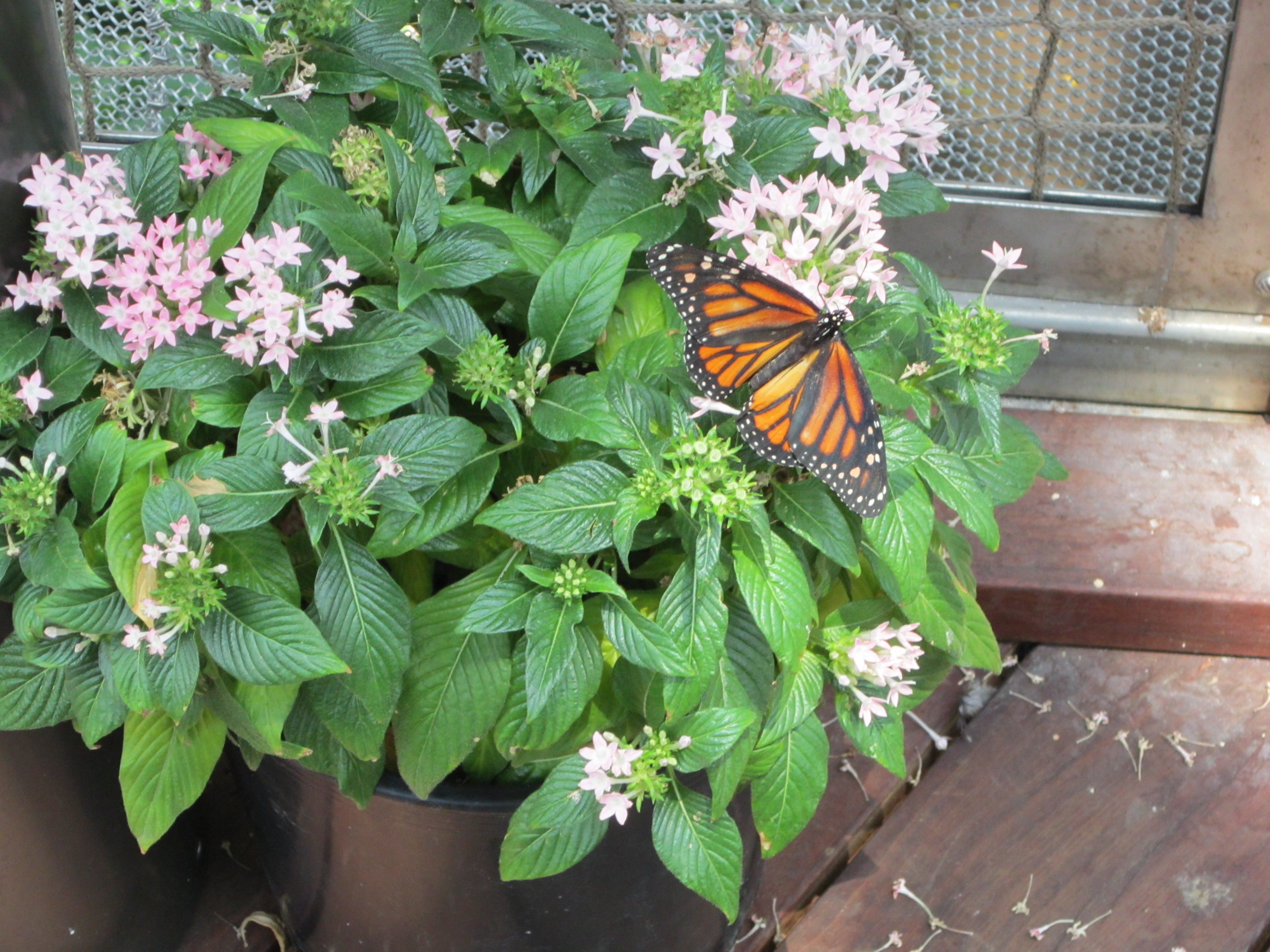
Butterflies could be seen all over North Texas
Photo by Shellie Metroka
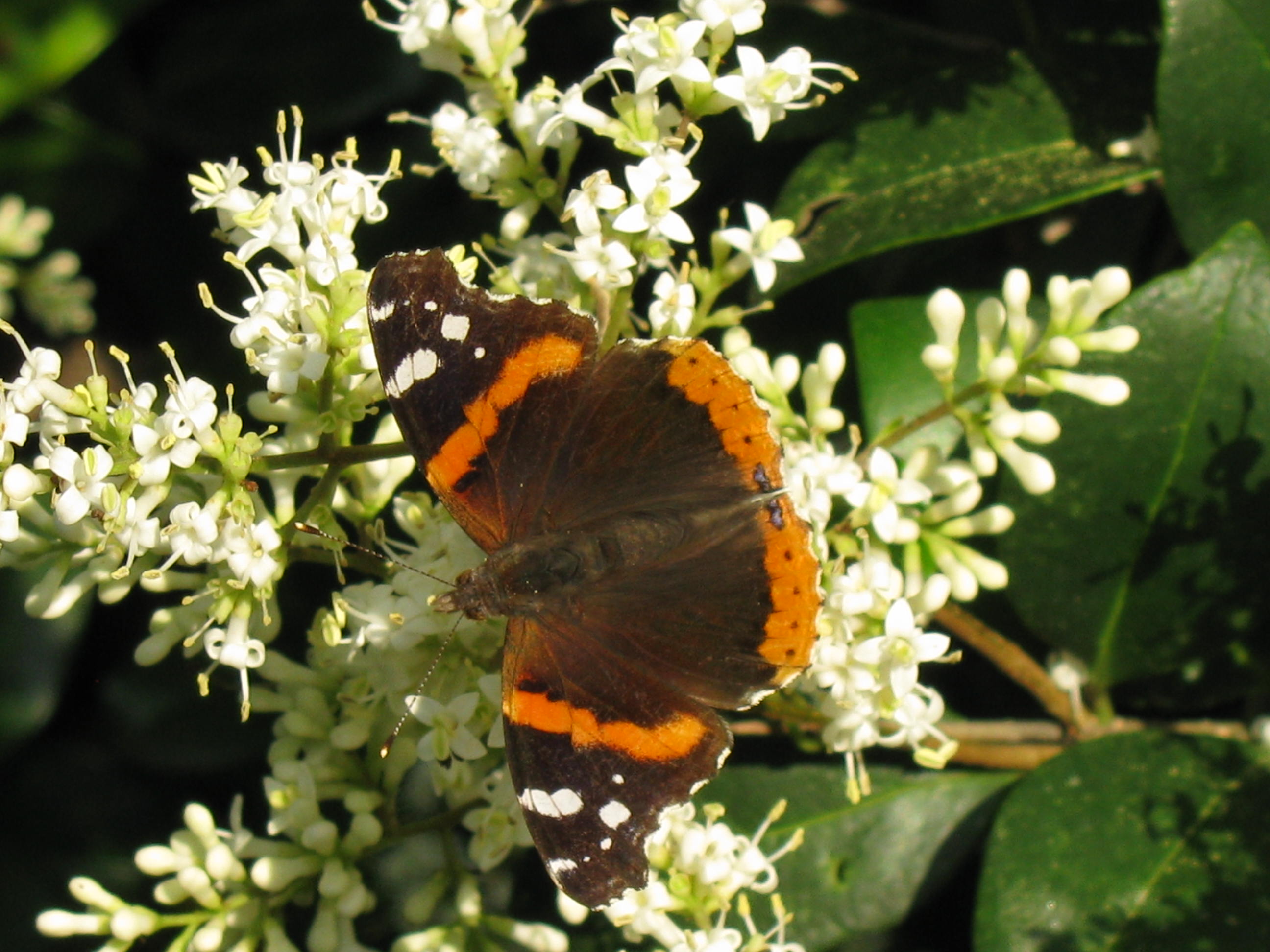
Red Admiral
Photo by Shellie Metroka
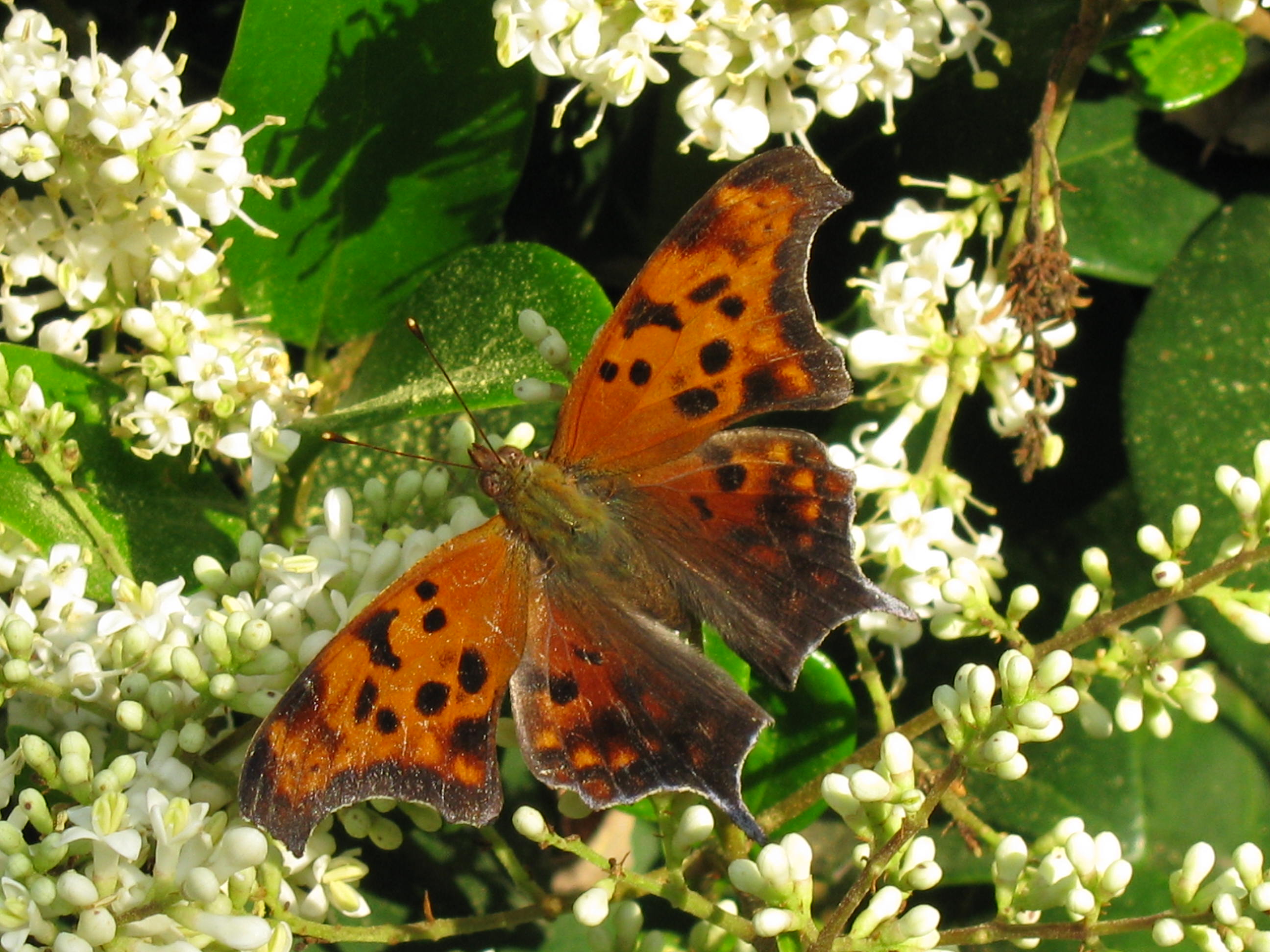
Question Mark Butterfly
Photo by Shellie Metroka
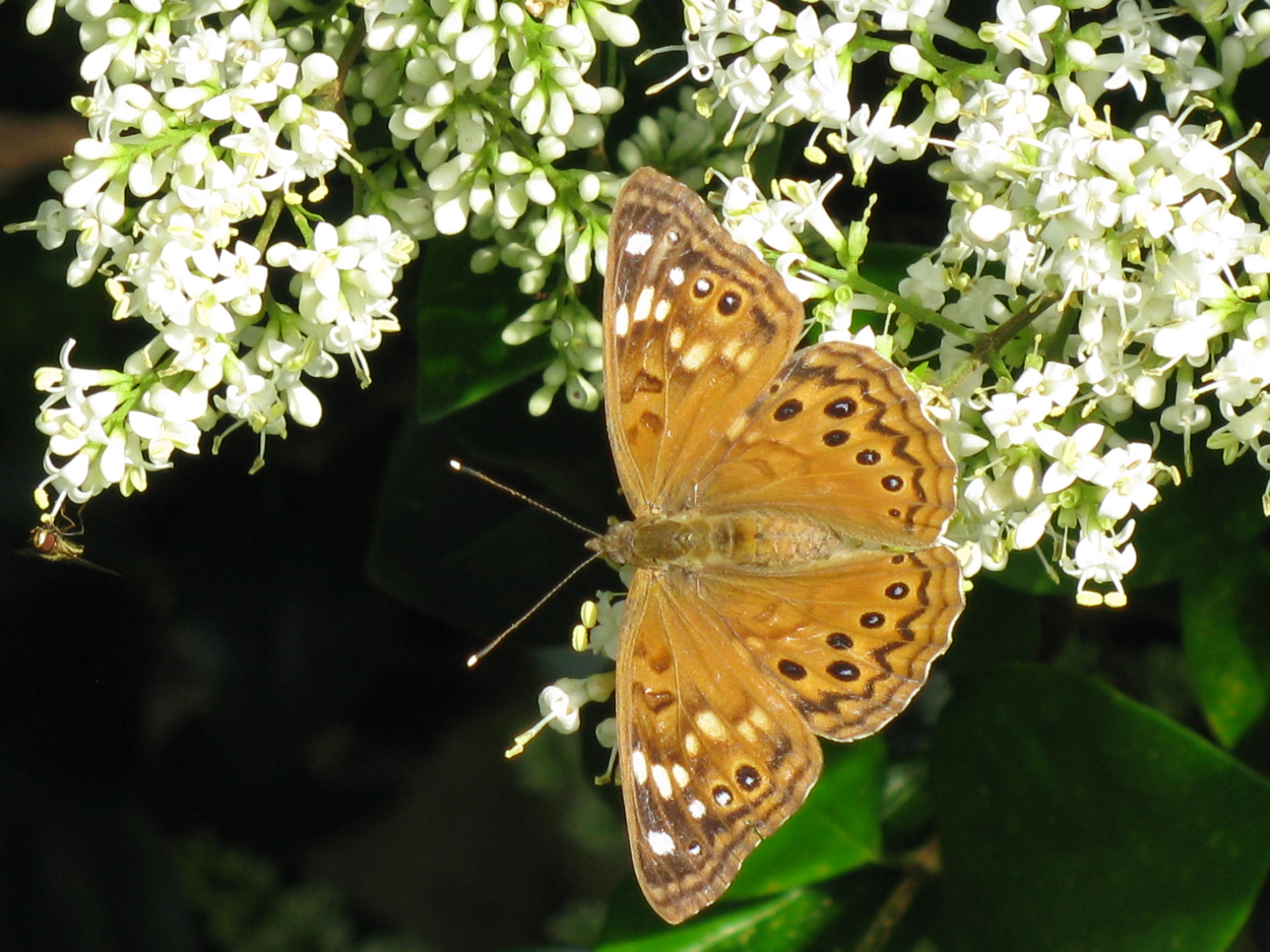
Hackberry Butterfly
Photo by Shellie Metroka
School’s Out for Summah!

Leave a comment

I’m psyched that the last day of school for me was on May 10. I went to a cool end of the year party, I’ve gone to see the Avengers and Dark Shadows, I went to a wedding shower for my cousin, and I’ve played A LOT of XBox. My mom says that now it’s time to get down to work.

June and July is when I will do my big fundraising for the Fort Worth Nature Center & Refuge and Big Cat CARE. I want to try to get as many companies as possible to donate something to these two charities. This year my friend Manda is going to help me. I also made these little one-page brochures that I plan to leave with everyone I talk to.

I still collect money at my dad’s store (The Import Store). I was collecting a good amount until someone broke into the store and stole the money. I also still sell Joe Sent Me! t-shirts for a suggested donation (see the Joe Sent Me! page of this blog).

I hope that you will still donate this year. I’ll take any amount — $1, $10, $20. I’ll even take a penny if that’s all you can give. Every little bit helps us feed the animals of the Nature Center and Big Cat CARE.

Now that it’s summer vacation I’ll be blogging more, too.

Talk to you soon!

What part of an ostrich is SMALLER than its eye?

Leave a comment

Everyone answered this poll correctly. Ostrich’s brains are smaller than their eyes. I’m not too fond of  the ostrich. My earliest memory when I was a toddler was when my mom and dad took me to Fossil Rim and I was feeding an ostrich. It tried to swallow my entire hand. Ever since, ostrich sort of bug me. I roll up all the windows when I go to Fossil Rim and they are hanging around.

It’s Spring, which means I WANT YOU!

Leave a comment

I like spring. My parents and I were driving back from Glen Rose early this morning and we saw a bunch of goats with baby goats. They were all running in a giant herd. I was surprised that those baby goats could keep up with the grown ups so well.

I’ve been on spring break this last week. We didn’t go anyplace because my mom and dad had a lot of work to do and we’re going to take a trip this summer, so I mostly played on my XBox, saw a few friends and worked on this year’s fundraising for the Fort Worth Nature Center & Refuge and the Center for Animal Research & Education (Big Cat CARE).

I’m going to do things a little differently this year. The main thing is I’m getting a friend to help me raise money. Her name is Manda Tuttle. She is 13, too. I’ve known her for years, since elementary school. Manda has experience raising money, especially with Kids Who Care (kidswhocare.org). She’s been with that group for a lot of years.

Manda and I met last week at Panera’s Bread and put together a bunch of places we want to visit for fundraising. We made a list of a lot of companies but we also will accept private donations from people. Both the FWNC&R and Big Cat CARE are 501C(3) charities so you can write your donation off on your tax return.

There are a few ways to make donations:

You can donate to get a “Joe Sent Me! t-shirt. There is a page at the top of my blog that is called “Making $ with Joe Sent Me!” If you print the order form and mail it and your suggested to the address I listed then I will send you a t-shirt. The proceeds will go to whichever charity you want OR split between both. OR — you can just send a cash donation care of my dad’s store:

Joe Sent Me! c/o The Import Store

915 W. Belknap

Fort Worth, TX 76102

My mom will send you a receipt so you have it for your tax records.

The bottom line is that I WANT YOU to donate!

Thanks for all your help. And warning — you may personally hear from me soon.

One-on-One with a Honduran Milksnake and a Joey

Leave a comment

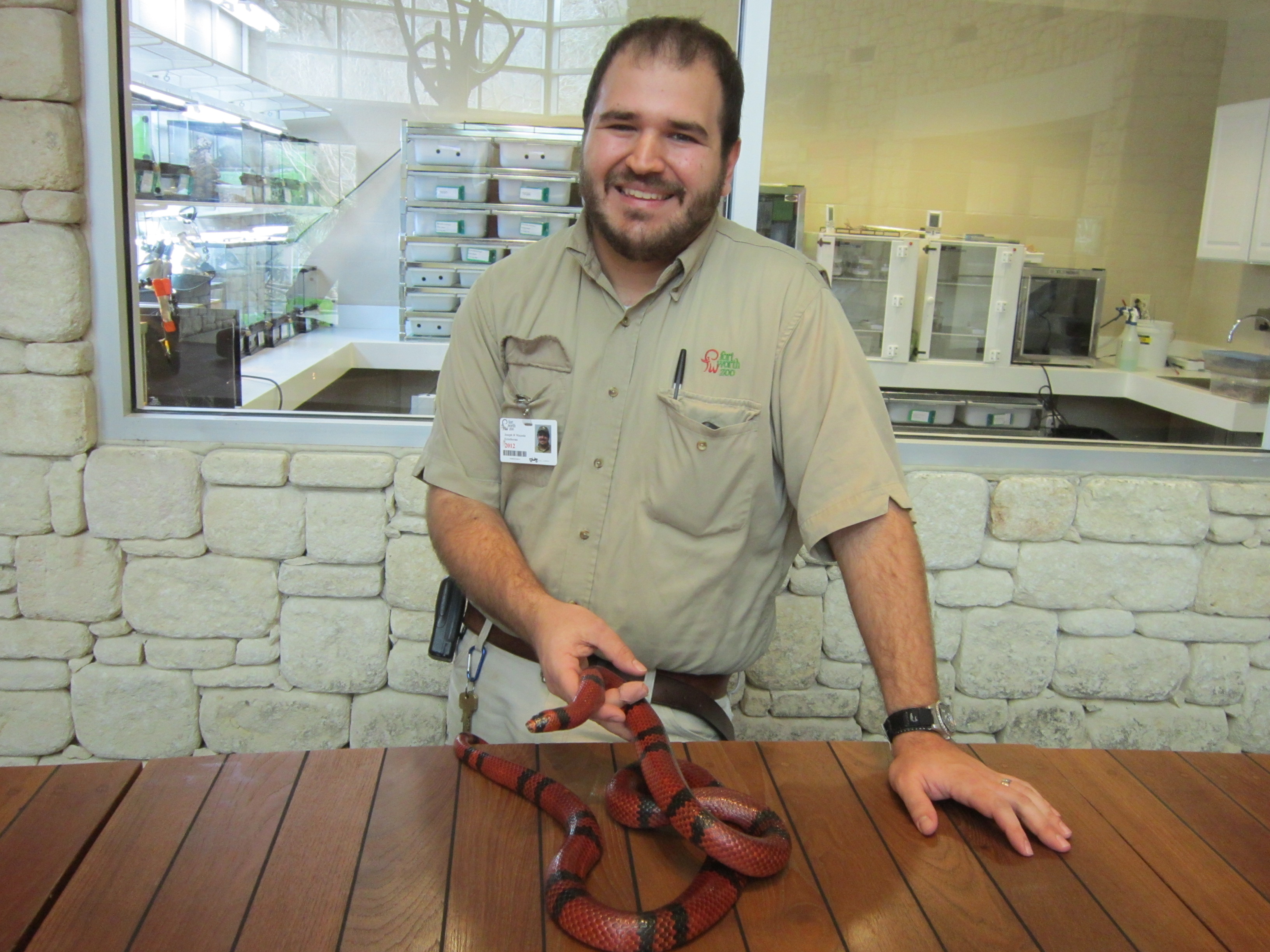
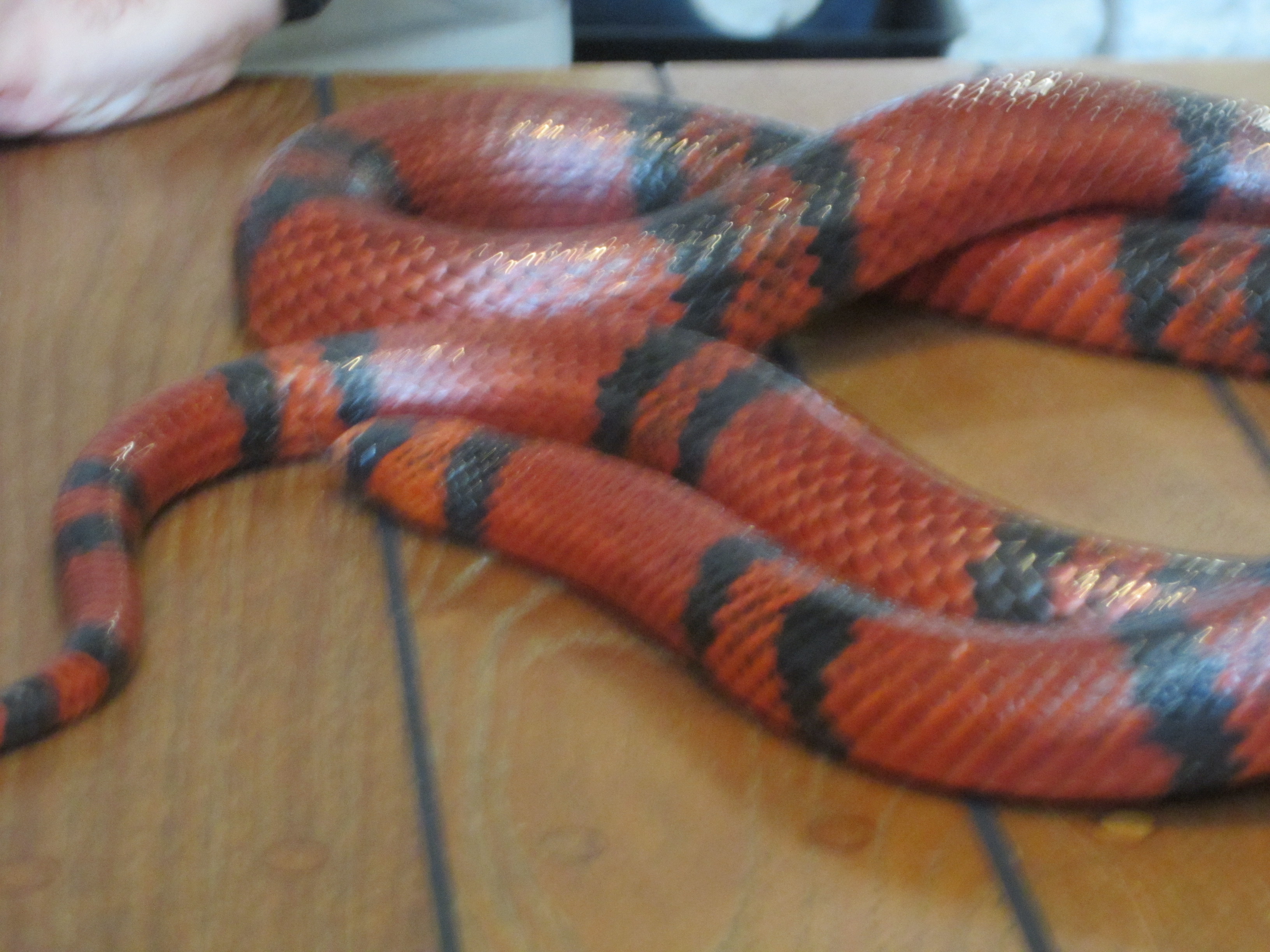
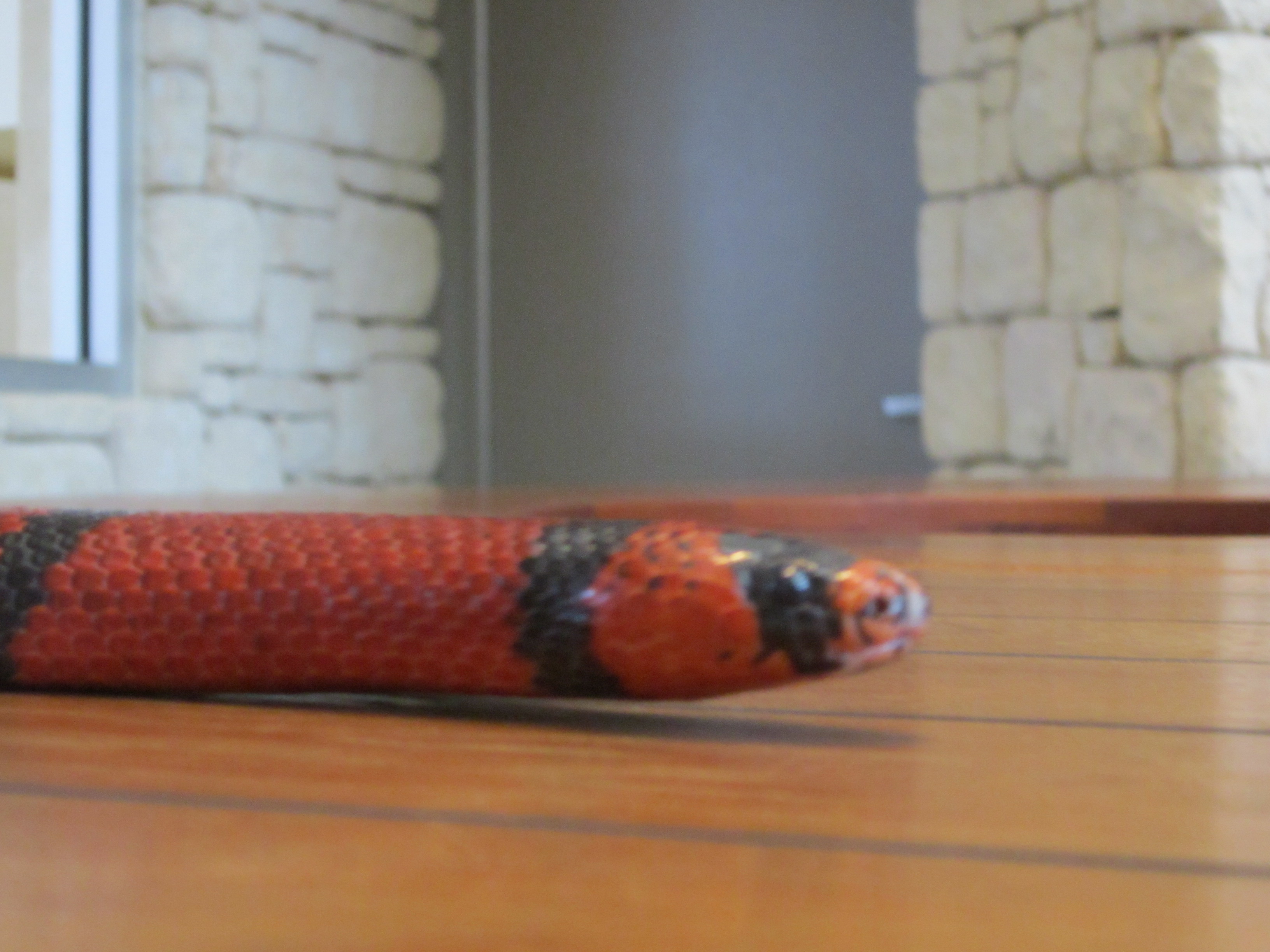
When you first look at him, he looks like one of those wooden toy snakes you get that sort of twist and turn when you hold it’s tail. This is the real McCoy, though. I went to the Fort Worth Zoo yesterday and talked with Joey the zookeeper in the Museum of Living Art (MOLA). The MOLA is one of my favorite places to visit at the zoo.

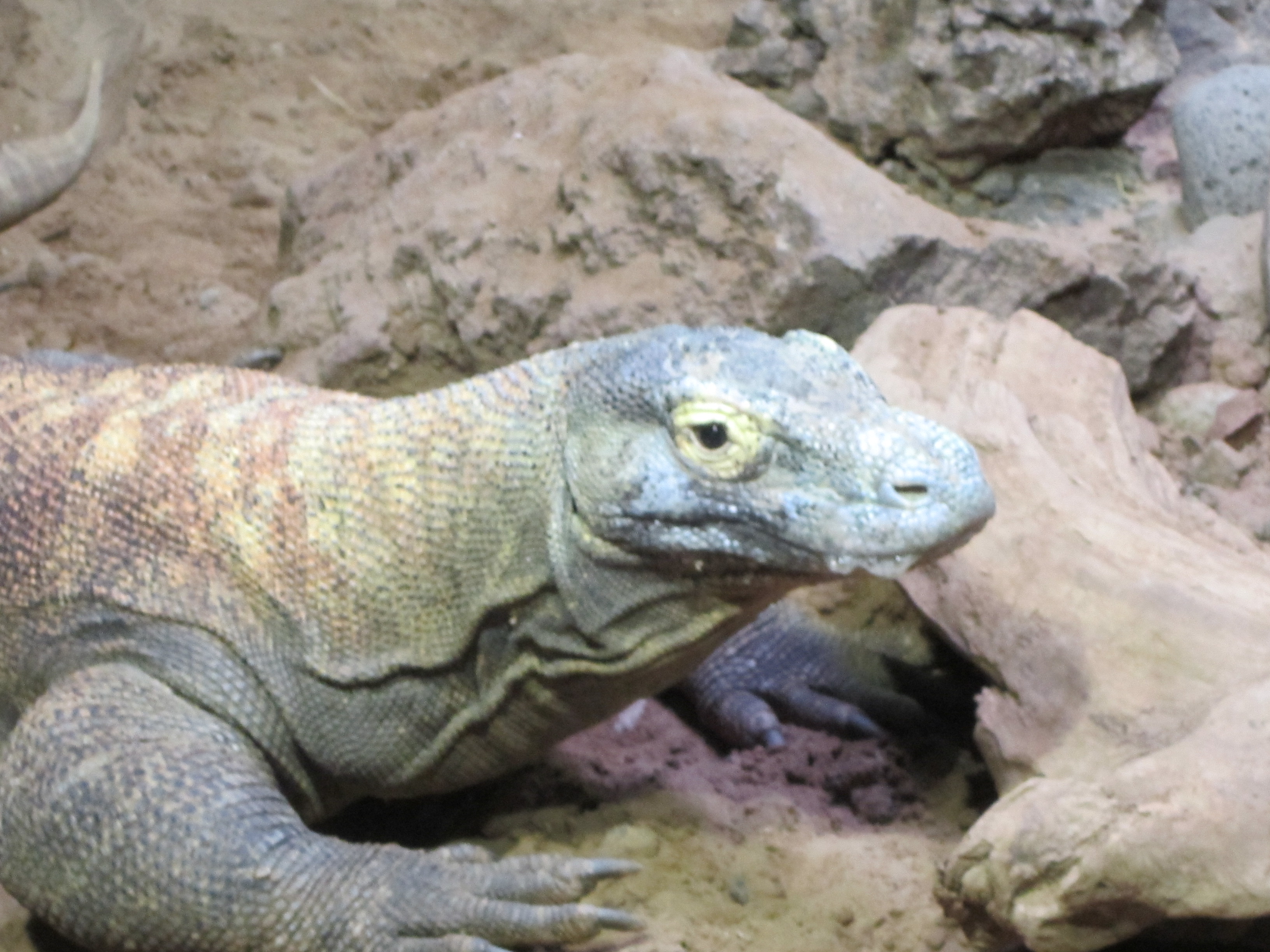
Joey was fun to talk with. He had a lot of great information to share about the critters he works with. His favorite guys are the Komodo dragons he cares for at the zoo. He says they are very personable, they are fun to stimulate and are actually pretty interactive. Now I have to convince my mom they are cool because she still gets the willies when she sees them.Joey said that there are two Komodo stepbrothers at the zoo. I asked him which one has the most personality and he told me they both have a lot.  They think things through.

The Honduran milksnake was interesting, too. This is what Joey had to say about it:

JK: What is your job at the Fort Worth Zoo?

Joey: I am the zookeeper mostly for the Komodo dragons and the saltwater crocodiles. I also care for the stingrays and some of the other reptiles.

JK: What are you showing off today?

Joey: This is a Honduran milksnake.

JK: Is it endangered?

Joey: No, I’m glad to say it is not.

JK: What does it like to eat?

Joey: Honduran milksnakes are carnivores. It likes to eat things like small lizards and mice. This snake gets a frozen (then thawed) adult mouse to eat about once a week. Honduran milksnakes actually don’t eat that often. If it did eat more often it would not be healthy for it.

JK: How did milksnakes get that name?

Joey: Milksnakes are often found in barns with the cattle. A long time ago farmers thought that since they always found them in the barns that the snakes were after the milk from the cattle. Really, though the snakes live in the barns because they are warm, they have good places to hide and there are lots of mice around. They don’t drink milk at all!

Some other fun facts I learned from Joey about milksnakes are that they are ectothermic (cold blooded). It is slick to touch. Snakes have a variety of skin-types. Some are very soft to the touch like touching fabric. Some feel like you are touching concrete. The Honduran milksnake was very smooth to the touch. They are not venomous so they do not have fangs, but they have sharp little teeth. Joey told me that this snake is pretty tame and has never bitten him.

Milksnakes will study the movements of mammals. A mammal may have a regular path it takes everyday, maybe to a water source, or something. The milksnake will sort of set up house around that path and then nab the mammal when it is on its way to water. The milksnake constricts its prey.

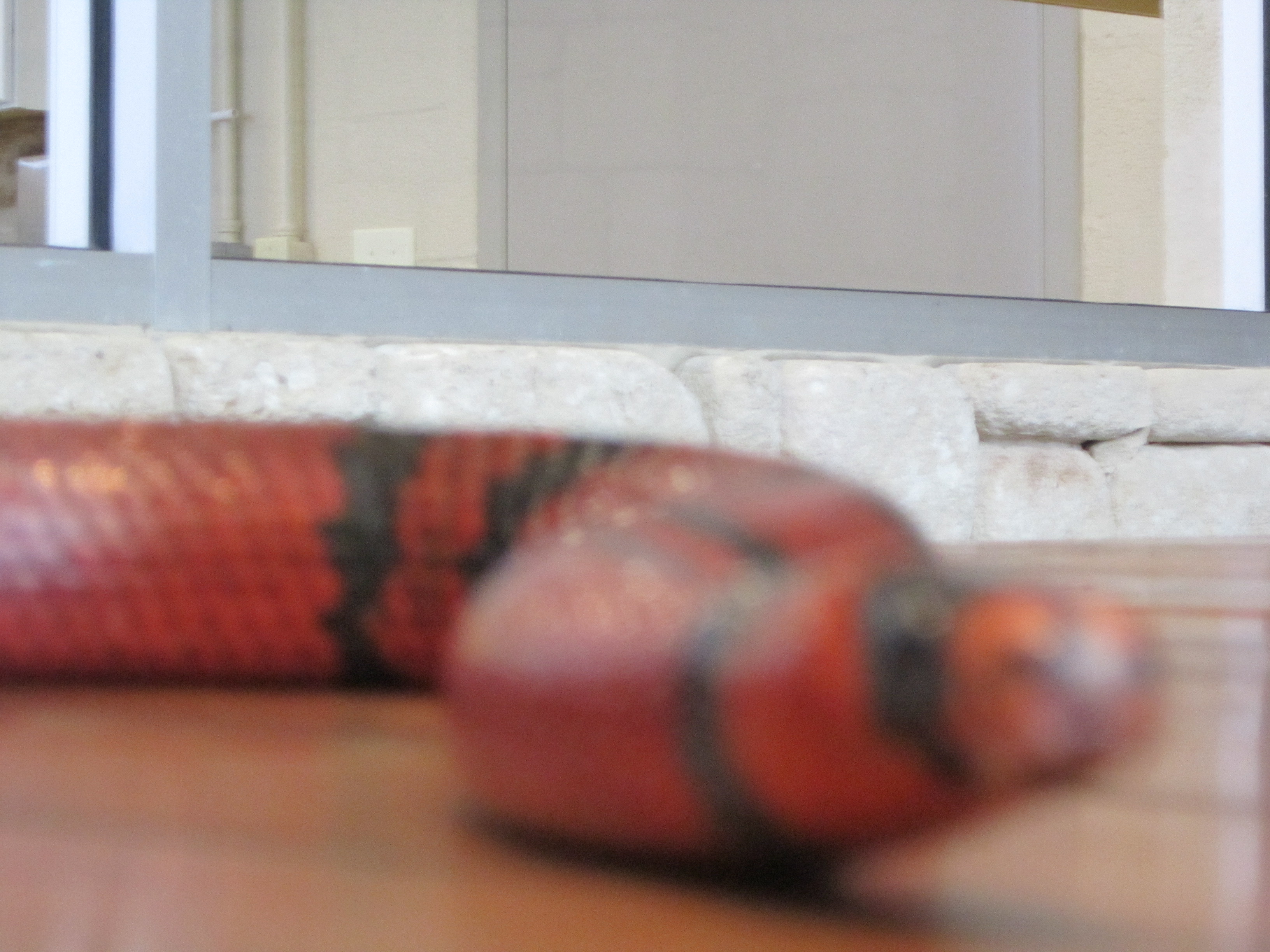
I liked this Honduran milksnake. It was very nice and it was very curious. Thanks for all the info, Joey!


Big Cat CARE is going to the…LEMURS?

Leave a comment

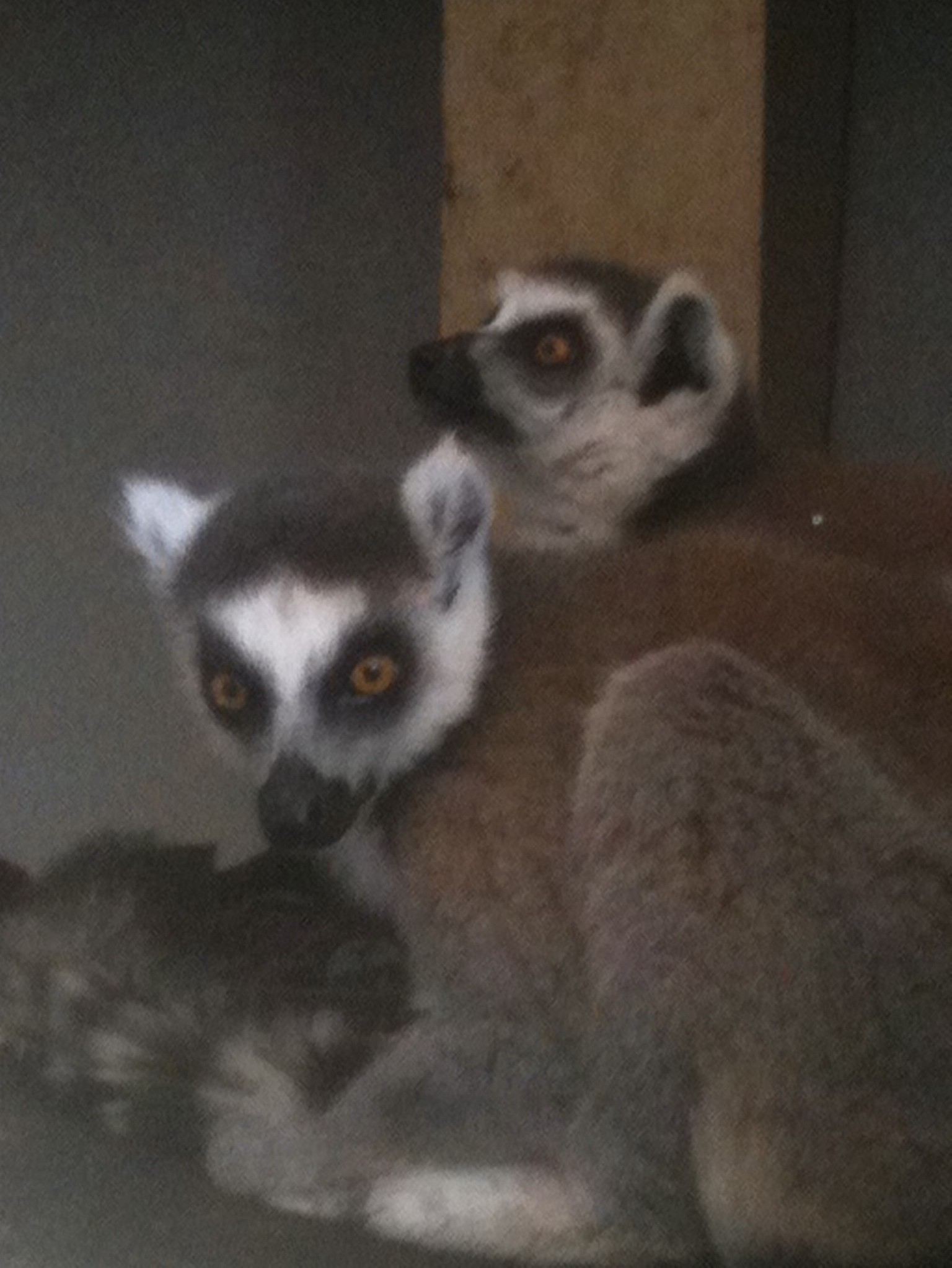
Big Cat CARE now has lemurs. They got a really nice enclosure built by some companies called 84 Lumber and Triple B Builder and a lot of volunteers. There are five lemurs and they are named Mort, Akisa, Ruth, Rita and K.J. I want to meet K.J. since she has my initials only backward.

According to the website “Lemurs,” (http://www.lemurs.us/basics.html) they said this: “Lemurs are small primates known as “prosimians,” which, roughly translated, means “pre-primates” or “before monkeys.” Native only to the island of Madagascar and the neighboring Comoro Islands, lemurs resemble the oldest ancestors of primates which existed tens of millions of years ago.”

I remember when I was a little kid I liked the movie Dinosaur by Disney and there were lemurs in it. It’s kind of funny to think of lemurs being such an old species. We always thing about how old tortoise, crocodile or shark species are but we don’t always think about mammal species being old.

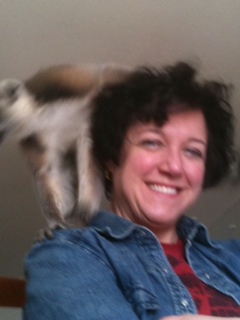
I just went today (Sunday, 1-29) to Big Cat CARE. My friend Sean and I got to have an encounter at the new exhibit. I wasn’t allowed to actually touch the lemurs but they are allowed to crawl all over me. They didn’t crawl on me because they thought I was extra-nice, or anything. They crawled on me because I was holding pieces of banana. Sometimes when they walk past me I can feel their long tails rub against my face. They were very soft. Their hands and feet are both just like hands for gripping and such which allowed them to climb on top of my mom’s head at one point. I really enjoyed this encounter. It’s sort of a strange mix to have all those big cats and little, fluffy lemurs. I bet the lemurs like their new digs and I bet all the cats are curious about this new smell they are encountering.

My friend Sean really liked this place, too. He said it was neat to be able to see all the personalities of the cats. He also thought the staff at Big Cat CARE were all very cool, too. They knew each cat by name and little stories about each. Heidi and gang at Big Cat CARE all rock!

Big Cat CARE always needs donations so think about giving to them to help support animal education and making sure that these animals retire with dignity.

CARE will be starting a lemur encounter in March. The cost of the encounter will be $50 for 1 hour. CARE will have more details about it soon. Check out their site at http://bigcatcare.org to find out more details.

Also, check out my video of my encounter on http://www.youtube.com/watch?v=FkQ7ADGM1nw

Scott Wilson Builds with the Earth in Mind

Leave a comment

I have a friend and his dad owns an architect firm in Fort Worth, Texas. Scott Wilson is one of the owners of Quorum Architects. They’ve been in business for almost 20 years. Quorum Architects try to build with the earth in mind. I talked a little with Scott about how his company is trying to help with conservation and help in maintaining habitats.

J: Why are you interested in conservation in architecture?

S: Well, instead of taking down another building and then re-building another building we try to restore the existing building. We can’t do that every time but we try as much as we can to do that.

J: Why do you think it is important to be conscientious about conservation in your business?

S: To save energy in as many ways as possible is important. For example we try to be green by recycling paper and using energy efficient lighting to save money and energy. Our own office building provides another example of why we try to be conscientious to nature. If we tore down this building the office roof alone has about 20,000 square feet of lumber on it. It we rebuilt, we’d have to use that same amount of lumber to replace our roof. By doing that there would have to be lots of trees cut down. These trees are home to thousands of organisms and animals – so we wouldn’t be doing them any favors by rebuilding, would we? It’s best to try to keep what is already existing so we save the materials that are already used and do not deplete natural resources for more.

J: Can you explain one specific example of the things do you do in your business to be Earth friendly?

S: When we design a building we try to get materials that are within 500 miles of our location. We try not to go someplace like China to get materials. This method saves gas (because of less travel), and that also helps keep the carbon emissions down for cleaner air because we used things in close proximity. It also helps our economy because we keep business within our states.

J: What are some of the different types of earth friendly projects you have worked on?

S: Sherwin Williams and Quorum work together to build their first Leaders in Energy Environmental Design (L.E.E.D.). This is a rating system for earth-friendly buildings. We designed the first L.E.E.D. project which used less energy to build and to run.

J: Have you worked on any conservation projects that have affected animals? What were they?

S: We have done numerous animal adoption centers where natural light is allowed into the space. There is fresh air and a small outdoor area where dogs and other animals can stretch. There are no toxic or unhealthy paints on the wall. We also used recycled steel to make the animal cages!

J: What is your main goal with conservation and architecture?

S:As our architectural footprint grows we try to make a smaller carbon footprint.

Scott Wilson of Quorum Architects keeps nature in mind when he designs.

Thanks Scott. I’m glad you’re serious about conservation in the things we build.

The Most Popular Bird in America!

2 Comments

The turkey. We love eating them on holidays. They are DELICIOUS.  Did you know that most turkeys are SO heavy that is why they can’t fly? Well, wild turkeys (that weigh less than the domesticated turkeys that we eat) can fly. That means a quick turkey dinner for us carnivores!

Did you also know that peacocks are not the only birds who have really great tail feathers that they spread to attract a mate? Turkeys do too. So turkeys are basically male models.

That red thingy that hangs down on a turkey’s beak is called a wattle. A wattle turns bright red when the turkey is upset or during courtship.

Turkeys are not endangered because there are 256 million of them. And it is said that the pilgrims ate a turkey dinner on the first Thanksgiving but it is NOW said that wasn’t exactly true. They probably ate mostly fish and deer (stuff that the native Americans ate).

turkeys

SOURCES:

Animal Facts — http://www.kidzone.ws/animals/turkey.htm

Cha-Cha — http://www.chacha.com/question/why-do-turkeys-have-wattles


Makin Money!

Leave a comment

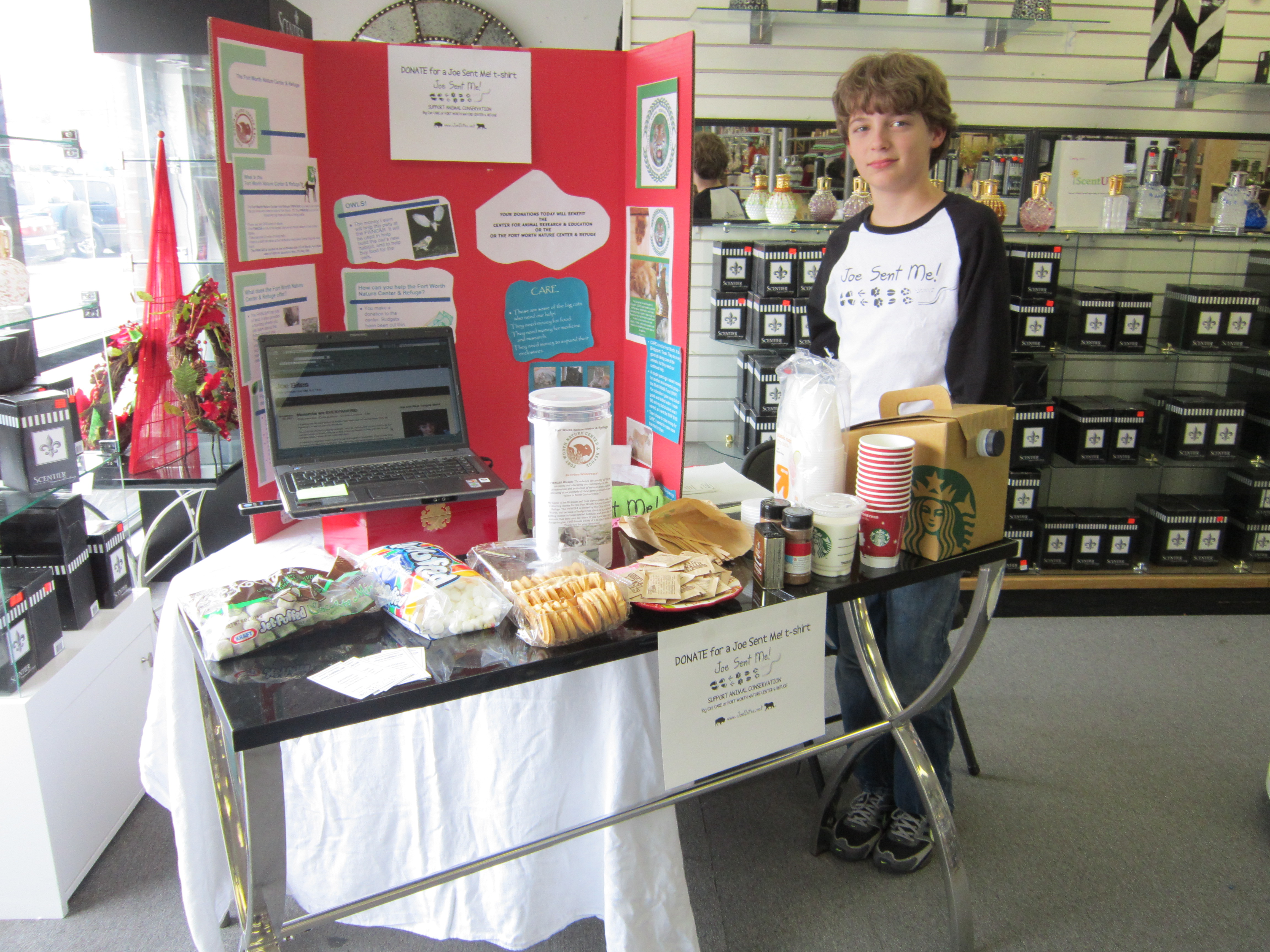
I did a little fundraising the day after Thanksgiving at my dad’s store. I sold SIX (count them) SIX “Joe Sent Me!” t-shirts for the Nature Center and for CARE. HOORAH! I made a little over $100 that I will split between the two groups. I think I’ll try another fundraiser before the holidays. I hope to raise enough to give both the Nature Center and CARE at least $100, each.

Thanks to everyone who helped!

Joe raising money on black Friday

Monarchs are EVERYWHERE!

Leave a comment

It’s getting into fall and Monarch butterflies have been seen all over the place. They are migrating to a warmer place for the winter.

Every year the monarch butterfly migrates. They are cold-blooded so they need to be in a warmer climate to survive. They also need to be near flowers so they can’t live in cold climates where flowers do not continually grow.

A monarch’s migration starts sometime around August or September. They usually head to places like Mexico or California. They can come from as far away as Canada, so it’s a lot of work for a little butterfly to make its way to a warmer climate.

Deforestation is hurting monarch butterflies which has led to a reduction of their numbers. There are efforts by groups who are trying to get the monarch butterfly classified as a protected specie. A lot of people are trying to make habitats for them, too.

Monarchs eat flowers from the milkweed family. If you plant a medium-to-large pot of flowers for them in your yard, it would really help. It’s simple to do and it’s a fun project. I got a list of flowers from Wikipedia that you could plant to help feed monarchs on their journey south or when their back in the neighborhood. So start plantin!!!
• Indian Hemp
• California Milkweed
• Swamp Milkweed
• Common Milkweed
• Butterfly Weed
• asters
• thistles
• Wild Carrot
• Teasel
• Horseweed
• Spotted Joe-Pye Weed
• Common Boneset
• Dame’s Rocket
• Alfalfa
• golden rods
• Lilac
• Red Clover
• Tall Ironweed
Sources:
Wikipedia
http://en.wikipedia.org/wiki/Monarch_%28butterfly%29
The Butterfly Site
http://www.thebutterflysite.com/butterfly-migration.shtml

Older Entries Newer Entries